Introduction
Yoga offers a vast range of postures that challenge the body while calming the mind. Some poses build strength, others improve flexibility, and a few combine both with deep mental focus. Surya Yantrasana, commonly known as Compass Pose, is one such advanced yoga asana that beautifully blends strength, flexibility, balance, and concentration.
Surya Yantrasana is a deep seated posture that requires open hips, flexible hamstrings, strong shoulders, and a focused mind. Though challenging, the pose is deeply rewarding and helps practitioners explore the limits of their physical and mental endurance. It teaches patience, awareness, and discipline—essential qualities on the yogic path.
In this blog, we will explore the meaning, origin, step-by-step practice, benefits, precautions, variations, preparatory poses, and spiritual significance of Surya Yantrasana in detail.
Meaning and Origin of Surya Yantrasana
The Sanskrit name Surya Yantrasana is derived from three words:
-
Surya – Sun
-
Yantra – instrument, tool, or sacred diagram
-
Asana – posture
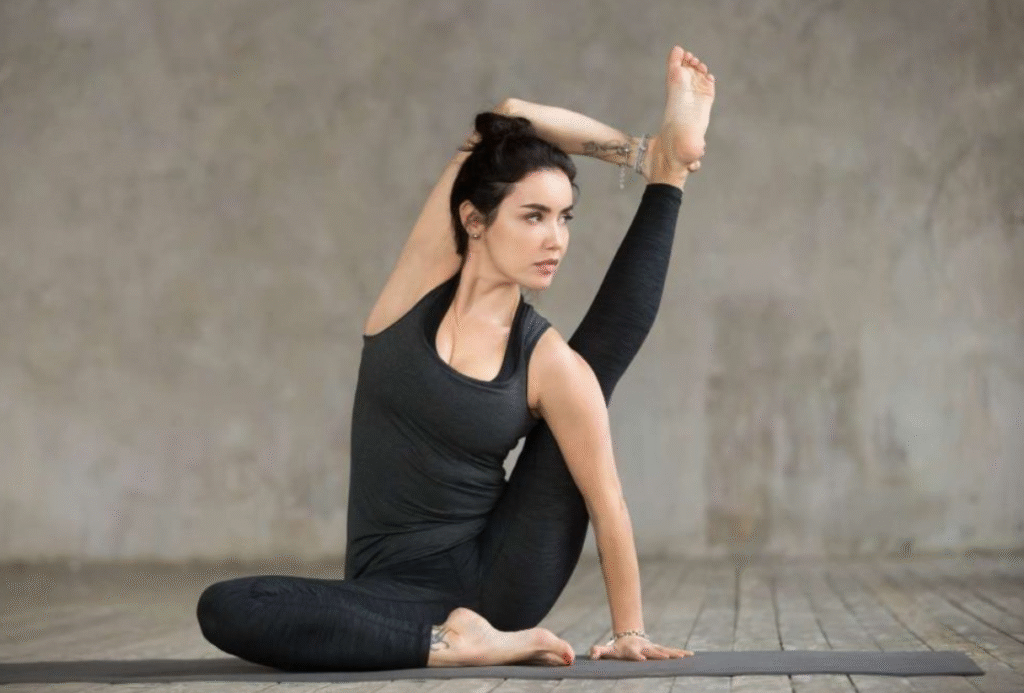
Surya Yantrasana translates to “Sun Instrument Pose” or “Sun Dial Pose.” In English, it is popularly called Compass Pose because the shape of the body resembles a compass needle pointing outward.
The pose symbolizes direction, focus, and clarity, much like a compass guided by the sun. Though Surya Yantrasana is not described in ancient Hatha yoga texts, it has become an integral part of modern yoga styles such as Vinyasa and Ashtanga, where strength and flexibility are combined with mindful movement.
Understanding Surya Yantrasana
Surya Yantrasana is a seated, deep side stretch and hamstring opener. The pose requires lifting one leg overhead while maintaining an upright spine and open chest. This posture challenges:
-
Hamstrings
-
Hips
-
Spine
-
Shoulders
-
Core muscles
Due to its intensity, Surya Yantrasana is classified as an advanced yoga posture and should only be practiced after sufficient preparation and warm-up.
Step-by-Step Practice of Surya Yantrasana
Starting Position
-
Sit on the mat in Dandasana (Staff Pose) with both legs extended.
-
Keep the spine long, shoulders relaxed, and chest open.
-
Take a few deep breaths to center yourself.
Entering the Pose
-
Bend your right knee and bring it toward your chest.
-
Hold the right foot with both hands.
-
Slowly lift the right leg upward, keeping the spine tall.
-
Bring the right knee close to the right shoulder.
-
Slide the right arm under the leg and place the right hand on the floor beside the hip for support.
-
Extend the right leg upward and slightly outward.
-
Hold the right foot with the left hand, extending the left arm overhead.
Final Position
-
Keep the chest open and spine straight.
-
Extend the right leg as much as possible without strain.
-
Gaze forward or upward.
-
Hold the pose for 5–10 deep breaths.
Releasing the Pose
-
Slowly bend the raised leg.
-
Bring it back to the chest.
-
Return to Dandasana.
-
Repeat on the opposite side.
Breathing in Surya Yantrasana
Breath control is essential in this pose:
-
Inhale to lengthen the spine and lift the chest.
-
Exhale to deepen the stretch.
-
Steady breathing helps maintain balance and ease.
Physical Benefits of Surya Yantrasana
1. Deep Hamstring Stretch
This pose provides an intense stretch to the hamstrings, improving flexibility and reducing stiffness.
2. Opens Hips and Groin
Surya Yantrasana enhances hip mobility and releases tight hip joints.
3. Improves Spinal Flexibility
The side stretch lengthens the spine, improving posture and spinal health.
4. Strengthens Core Muscles
Maintaining balance activates abdominal and lower back muscles.
5. Enhances Shoulder Mobility
The overhead arm stretch opens shoulders and arms.
Mental and Emotional Benefits
1. Improves Concentration
Balancing in the pose requires focus and awareness.
2. Builds Patience and Discipline
The gradual nature of the pose teaches perseverance.
3. Reduces Stress
Deep stretching combined with controlled breathing calms the nervous system.
Chakra Activation
Surya Yantrasana primarily stimulates:
-
Manipura Chakra (Solar Plexus Chakra) – confidence and inner strength
-
Anahata Chakra (Heart Chakra) – openness and emotional balance
Preparatory Poses
Before attempting Surya Yantrasana, practice:
-
Dandasana (Staff Pose)
-
Janu Sirsasana (Head-to-Knee Pose)
-
Baddha Konasana (Bound Angle Pose)
-
Upavistha Konasana (Wide-Angle Seated Pose)
-
Supta Padangusthasana (Reclining Hand-to-Big-Toe Pose)
These poses prepare the hips, hamstrings, and spine.
Contraindications and Precautions
Avoid or modify Surya Yantrasana if you have:
-
Hamstring injuries
-
Hip or shoulder pain
-
Lower back issues
Pregnant women and beginners should practice only under expert supervision.
Never force the leg overhead. Use yoga straps or practice half variations if needed.
Common Mistakes to Avoid
-
Rounding the spine
-
Locking the knee of the raised leg
-
Forcing flexibility
-
Holding the breath
Mindful practice ensures safety and effectiveness.
Modifications and Variations
Beginner Modification
-
Keep the raised leg bent.
-
Use a yoga strap around the foot.
Advanced Variation
-
Fully extend the leg with a deeper side bend.
-
Hold the pose longer with steady breathing.
Surya Yantrasana in Yoga Practice
Surya Yantrasana is often included in:
-
Advanced Vinyasa flows
-
Hip-opening sequences
-
Flexibility-focused yoga sessions
It is usually practiced in the middle or latter part of a session when the body is warm.
Therapeutic Benefits
With proper guidance, Surya Yantrasana may help:
-
Improve posture
-
Relieve stiffness in hips and legs
-
Increase overall body awareness
Spiritual Significance
Surya Yantrasana symbolizes direction, clarity, and inner strength. Just as the sun guides time and direction, this pose encourages practitioners to find balance and purpose within themselves. It teaches surrender, focus, and trust in the journey.
Conclusion
Surya Yantrasana, or Compass Pose, is a powerful and expressive yoga posture that tests flexibility, strength, and mental focus. While challenging, it offers deep physical benefits and profound inner awareness when practiced with patience and mindfulness.
With consistent practice, proper preparation, and respect for the body’s limits, Surya Yantrasana can become a transformative part of your yoga journey—guiding you toward balance, confidence, and clarity.
Leave a Reply