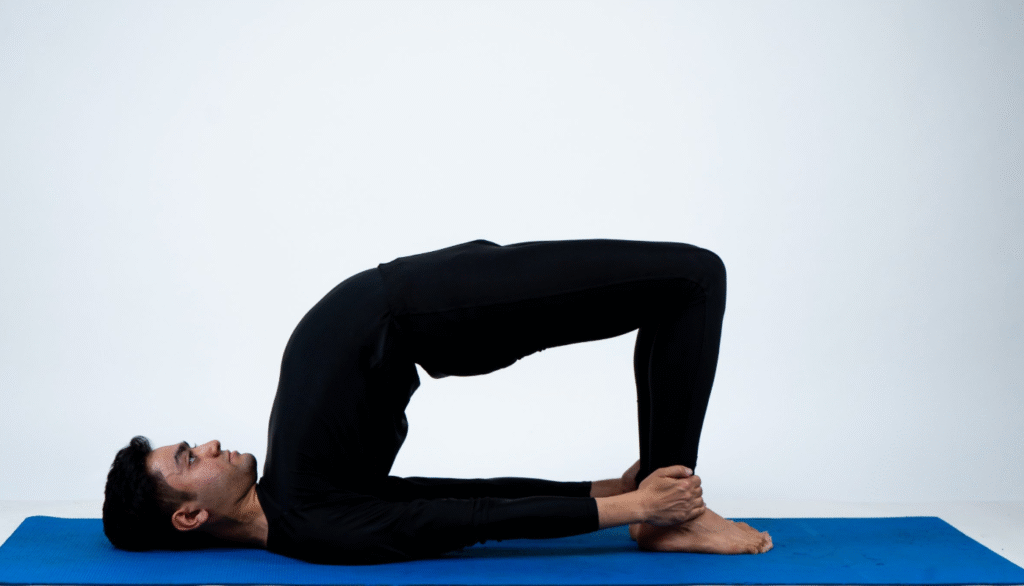
SETUBANDHASANA
Introduction
Bridge Pose, is a foundational yoga asana that offers deep physical, mental, and emotional benefits. The Sanskrit word means bridge, Bandha means lock or bind, and Asana means posture. In this pose, the body forms a bridge-like shape, connecting the lower and upper parts of the body while opening the chest and strengthening the spine.
widely practiced in Hatha Yoga, Ashtanga Yoga, and therapeutic yoga. It is suitable for beginners as well as advanced practitioners when performed with proper alignment. This pose helps counteract the effects of prolonged sitting, stress, and poor posture, making it extremely relevant in modern lifestyles.
In this blog, we will explore in detail, including its meaning, steps, benefits, precautions, variations, contraindications, and its role in overall wellness.
Meaning and Significance of
The bridge symbolizes connection and balance. In the practitioner bridges the gap between strength and flexibility, effort and relaxation. Energetically, this asana stimulates the Anahata (heart) chakra and Vishuddha (throat) chakra, encouraging emotional openness, confidence, and calmness.
This pose is also considered a mild backbend, which helps rejuvenate the nervous system and release stored tension in the body.
How to Perform (Step-by-Step Method)
Follow these steps carefully to practice Setu Bandhasana safely and effectively:
-
Lie flat on your back on a yoga mat in Shavasana position.
-
Bend your knees and place your feet flat on the mat, hip-width apart.
-
Bring your heels close to your buttocks.
-
Place your arms beside your body with palms facing down.
-
Inhale deeply and press your feet and arms into the mat.
-
Slowly lift your hips upward toward the ceiling.
-
Roll your shoulders underneath your body to open the chest.
-
Clasp your hands under your back if comfortable.
-
Keep your thighs parallel and knees stable.
-
Hold the pose for 20–60 seconds, breathing normally.
-
Exhale and gently lower your hips back to the mat.
-
Relax in Shavasana before repeating.
Breathing in
Breathing plays a vital role in maximizing the benefits of this pose:
-
Inhale while lifting the hips and expanding the chest.
-
Exhale gently while maintaining the posture.
-
Maintain slow, deep, and rhythmic breathing.
-
Avoid holding the breath, as it may create unnecessary tension.
Physical Benefits
1. Strengthens the Spine improves spinal flexibility and strengthens the vertebral muscles, helping maintain a healthy posture.
2. Opens the Chest and Lungs
This pose expands the rib cage and lungs, improving oxygen intake and respiratory efficiency.
3. Strengthens Legs and Glutes
The thighs, hamstrings, and glute muscles are actively engaged, improving lower-body strength.
4. Improves Digestion
Gentle stimulation of abdominal organs enhances digestion and relieves constipation.
5. Reduces Back Pain
Regular practice can help alleviate mild lower back pain and stiffness.
6. Supports Joint Health
It improves mobility in the hips, knees, and shoulders.
Mental and Emotional Benefits
1. Reduces Stress and Anxiety
The gentle backbend calms the nervous system and relieves mental fatigue.
2. Improves Mood
Activation of the heart chakra helps release emotional blockages and promotes positivity.
3. Enhances Focus
Controlled breathing and body awareness improve concentration and mindfulness.
4. Helps with Mild Depression
is often recommended in yoga therapy for mood regulation.
Therapeutic Benefits
This asana is beneficial in managing several health conditions when practiced under guidance:
-
Mild asthma
-
Thyroid imbalance
-
High blood pressure (with support)
-
Menstrual discomfort
-
Menopause-related symptoms
-
Insomnia
-
Fatigue
for Women
For women, offers unique benefits:
-
Helps regulate menstrual cycles
-
Relieves menstrual cramps
-
Reduces stress during menopause
-
Strengthens pelvic floor muscles
-
Improves reproductive health
Beginners
Beginners can modify the pose using props:
-
Place a yoga block under the sacrum for support.
-
Keep arms relaxed instead of clasping hands.
-
Hold the pose for a shorter duration.
-
Focus on alignment rather than height.
Advanced Variations
1. Supported Bridge Pose
Using a block under the lower back for restorative benefits.
2. Eka Pada
One leg is lifted upward, increasing strength and balance.
3. Wheel Preparation Pose
A preparatory pose for Chakrasana (Wheel Pose).
Precautions and Contraindications
Avoid or modify if you have:
-
Severe neck injury
-
Recent spinal surgery
-
Serious back pain
-
Slip disc issues
-
Uncontrolled high blood pressure
Always consult a yoga instructor or healthcare professional before practice if you have medical conditions.
Common Mistakes to Avoid
-
Overarching the lower back
-
Letting knees fall outward
-
Holding the breath
-
Placing weight on the neck
-
Lifting hips too quickly
Best Time to Practice
-
Early morning on an empty stomach
-
Evening, at least 4 hours after meals
-
Practice on a flat, comfortable surface
Yoga Sequences
This pose is often included in:
-
Warm-up sequences
-
Backbend series
-
Relaxation and restorative yoga
-
Stress-relief routines
It pairs well with:
-
Bhujangasana
-
Ustrasana
-
Halasana
-
Shavasana
Conclusion
is a powerful yet gentle yoga posture that bridges the gap between physical health and mental well-being. Its wide range of benefits—from strengthening the spine to calming the mind—makes it an essential asana for people of all ages.
With regular practice, mindful breathing, and proper alignment, can help you build strength, flexibility, and inner peace. Whether you are a beginner or an experienced yogi, incorporating this pose into your daily routine can significantly enhance your overall quality of life.
Practice consistently, listen to your body, and let become a bridge toward better health and harmony.