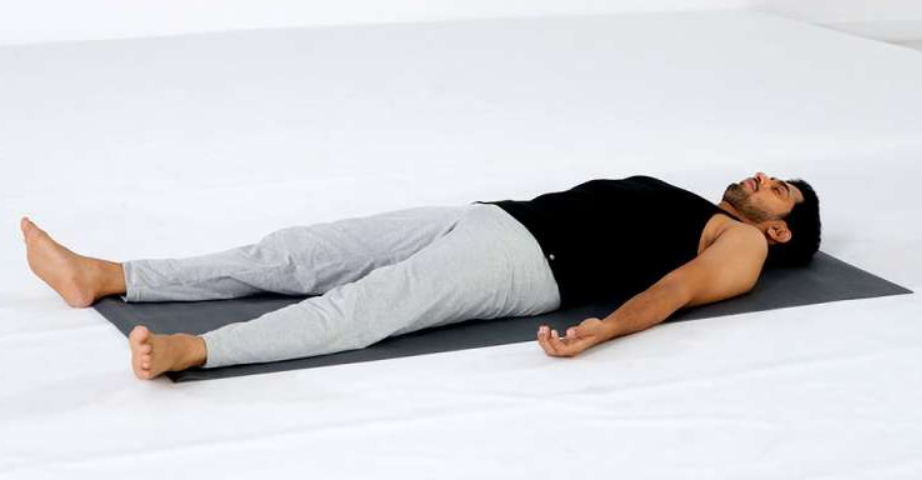
SHAVASANA
What is Savasana?
Savasana is a resting yoga posture performed by lying flat on the back with arms and legs relaxed. The eyes remain closed while attention is directed inward through slow, natural breathing. The posture promotes deep relaxation, mindfulness, and mental clarity. Savasana is usually practiced at the end of a yoga session, allowing the body and mind to absorb the effects of all previous asanas. It bridges the gap between physical exercise and meditation, making yoga a holistic practice rather than just a workout.
Savasana is practiced across all yoga styles including Hatha Yoga, Ashtanga Yoga, Vinyasa Yoga, and Restorative Yoga. It is essential for integrating physical, mental, and emotional benefits gained during practice.
How to Perform Savasana (Steps)

Follow these steps to practice Savasana correctly:
-
Lie Down Comfortably
Lie flat on your back on a yoga mat. Allow your feet to fall outward naturally. -
Relax the Arms
Place your arms slightly away from your body with palms facing upward. -
Align the Body
Ensure your spine, head, and neck are in a straight line. Use a thin cushion if needed. -
Close Your Eyes
Gently close your eyes and release tension from the face, jaw, and shoulders. -
Focus on Breathing
Breathe slowly and naturally without controlling the breath. -
Body Awareness
Mentally scan each part of the body, consciously relaxing from head to toe. -
Remain Still
Stay in Savasana for 5–15 minutes for maximum benefits. -
Exit Gently
Slowly deepen your breath, stretch your body, and roll to one side before sitting up.
Benefits of Savasana

Savasana offers profound physical, mental, and emotional benefits:
1. Reduces Stress and Anxiety
Savasana activates the parasympathetic nervous system, lowering stress hormones and promoting calmness.
2. Enhances Mental Clarity
Deep relaxation clears mental clutter, improving focus and awareness.
3. Lowers Blood Pressure
By calming the nervous system, Savasana helps regulate blood pressure and heart rate.
4. Improves Sleep Quality
Regular practice helps manage insomnia and promotes restful sleep.
5. Releases Muscle Tension
Conscious relaxation allows tight muscles to soften and recover.
6. Boosts Emotional Balance
Savasana helps process emotions and cultivates inner peace.
Importance of Savasana in Yoga Practice
Savasana is not optional—it is essential. Skipping Savasana prevents the body and mind from fully absorbing the effects of practice. This posture helps integrate physical exertion with mental stillness, making yoga a holistic experience rather than just a physical workout.
Savasana and Pranayama
Combining Savasana with gentle breath awareness or guided relaxation enhances its effectiveness. Techniques such as Yoga Nidra can be practiced in Savasana to reach deeper states of relaxation and healing 🧘♂️.
Common Mistakes in Savasana
-
Falling asleep instead of maintaining awareness
-
Tensing the jaw or shoulders unconsciously
-
Rushing out of the pose too quickly
-
Practicing in a noisy environment
Maintaining awareness without effort is the key to mastering Savasana.
Precautions and Modifications
Savasana is safe for most people, but consider these tips:
-
Use a bolster under knees if you have lower back pain
-
Pregnant women should practice under guidance
-
Use blankets for warmth during longer relaxation
Best Time to Practice Savasana
Savasana can be practiced:
-
At the end of a yoga session
-
Before sleep to calm the mind
-
During the day for stress relief
Even 10 minutes of mindful Savasana can refresh the body and mind.
Conclusion
Savasana teaches us the art of letting go. In a world filled with constant movement and mental noise, this simple posture offers deep rest, balance, and healing. Though it looks easy, its impact is transformative—physically, mentally, and emotionally.
With regular practice, Savasana helps cultivate mindfulness, inner calm, and a deeper connection with oneself. It reminds us that sometimes, the most powerful practice is simply being still .