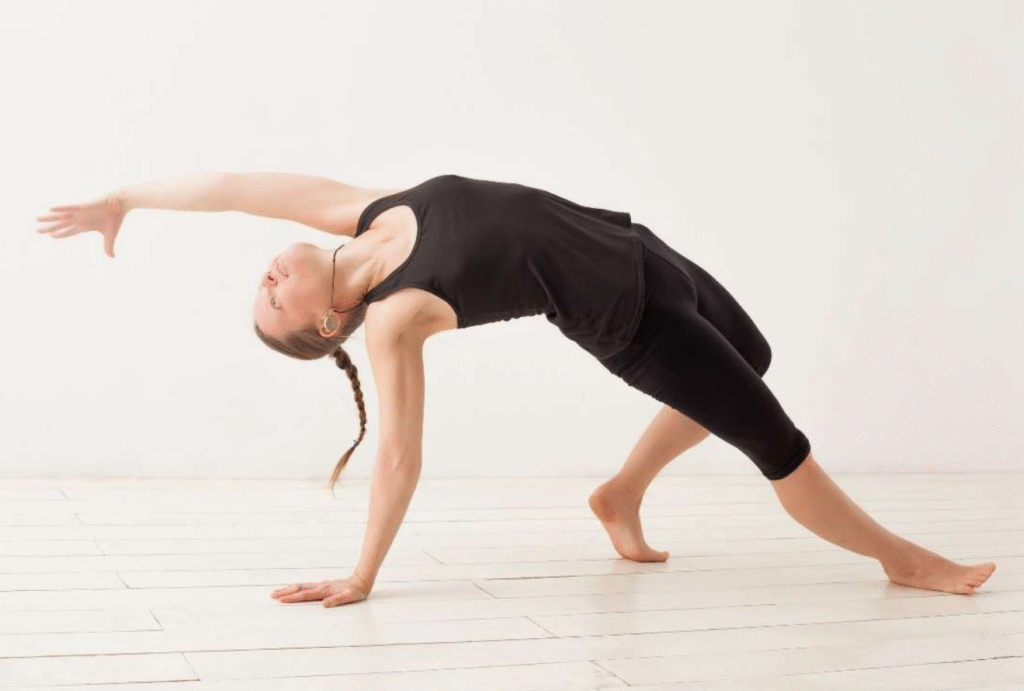
CAMATKARASANA
Introduction
Yoga is not only a physical practice but also a journey of self-expression, strength, balance, and freedom. Among the many expressive and energizing yoga postures, Camatkarasana, commonly known as Wild Thing Pose, stands out as a powerful heart-opening asana. This posture blends strength, flexibility, and grace, allowing practitioners to feel both grounded and liberated.
Camatkarasana is often practiced in modern Vinyasa and Ashtanga yoga sequences. It is a dynamic backbend that challenges the body while uplifting the mind. The pose encourages openness—physically through the chest and shoulders, and emotionally by inviting confidence and courage.
In this blog, we will explore the meaning, origin, step-by-step practice, benefits, precautions, variations, and the deeper significance of Camatkarasana in yoga practice.
Meaning and Origin of Camatkarasana
The Sanskrit word “Camatkara” means miracle, amazement, or something that evokes wonder, and “Asana” means posture. Thus, Camatkarasana translates to “the posture of wonder or amazement.”
The English name Wild Thing Pose reflects the free-flowing and expressive nature of the posture. Unlike traditional static poses, Camatkarasana encourages a sense of movement, creativity, and openness.
Although it is not found in ancient classical yoga texts like the Hatha Yoga Pradipika, Camatkarasana has become popular in contemporary yoga styles that emphasize fluid transitions and expressive movement.
Understanding the Pose
Camatkarasana is a backbend and heart-opening posture that builds upon arm balance and spinal extension. It is usually entered from Downward Facing Dog or Side Plank, making it a transition-based pose.
The posture requires:
-
Strong arms and shoulders
-
Flexible spine and hips
-
Body awareness and balance
Because of its dynamic nature, Camatkarasana is best practiced after proper warm-up and under guidance, especially for beginners.
Step-by-Step Practice of Camatkarasana
Starting Position
-
Begin in Adho Mukha Svanasana (Downward Facing Dog).
-
Ensure your palms are firmly grounded, fingers spread wide, and shoulders engaged.
-
Take a few deep breaths to prepare your body.
Entering the Pose
-
Shift your weight onto your right hand.
-
Lift your right leg and bend the knee, drawing the heel toward the hip.
-
Open the right hip and allow the knee to move away from the body.
-
Slowly step the right foot behind you, placing it on the floor with toes pointing outward.
-
Rotate your torso, allowing the chest to open toward the ceiling.
-
Keep the left arm strong and press firmly into the mat.
-
Extend your left leg straight and engage your core.
Final Expression
-
Lift the hips upward.
-
Drop the head gently back if the neck feels comfortable.
-
Gaze upward or toward the extended hand.
-
Hold the pose for 3–5 deep breaths.
Releasing the Pose
-
Gently return the right foot back to Downward Dog.
-
Rest and repeat on the other side.
Breathing in Camatkarasana
Breath plays a crucial role in this posture:
-
Inhale deeply as you open the chest and lift the hips.
-
Exhale slowly to maintain balance and control.
-
Smooth breathing helps release tension and deepens the stretch.
Physical Benefits of Camatkarasana
1. Strengthens Upper Body
Camatkarasana builds strength in:
-
Arms
-
Wrists
-
Shoulders
-
Upper back
Supporting body weight on one arm enhances stability and endurance.
2. Improves Spinal Flexibility
The deep backbend stretches the entire spine, improving flexibility and posture.
3. Opens Chest and Lungs
By expanding the chest, this pose improves lung capacity and encourages deeper breathing.
4. Strengthens Legs and Glutes
The grounded leg and lifted hips activate the thigh and glute muscles.
5. Enhances Balance and Coordination
Transitioning into Wild Thing requires body awareness, coordination, and control.
Mental and Emotional Benefits
1. Boosts Confidence
The bold nature of the pose encourages courage and self-belief.
2. Reduces Stress and Anxiety
Heart-opening poses are known to release emotional tension and promote relaxation.
3. Encourages Emotional Expression
The open posture helps release stored emotions and cultivates joy.
4. Increases Focus
Maintaining balance improves mental concentration and mindfulness.
Chakra Activation
Camatkarasana primarily activates the Anahata Chakra (Heart Chakra).
-
Promotes love, compassion, and emotional balance
-
Encourages openness and acceptance
-
Helps release emotional blockages
Preparatory Poses
Before practicing Camatkarasana, include these poses in your sequence:
-
Bhujangasana (Cobra Pose)
-
Ustrasana (Camel Pose)
-
Setu Bandhasana (Bridge Pose)
-
Vasisthasana (Side Plank)
-
Adho Mukha Svanasana (Downward Dog)
These poses prepare the spine, shoulders, and hips.
Contraindications and Precautions
Avoid or modify Camatkarasana if you have:
-
Shoulder or wrist injuries
-
Severe lower back pain
-
Neck problems
-
Recent surgery
Pregnant women should practice only under expert guidance.
Always warm up before attempting this pose and listen to your body.
Common Mistakes to Avoid
-
Collapsing into the supporting shoulder
-
Holding the breath
-
Overarching the lower back
-
Rushing into the pose without preparation
Mindful practice ensures safety and effectiveness.
Modifications and Variations
Beginner Modification
-
Keep the lifted leg bent without stepping the foot back.
-
Practice near a wall for support.
Advanced Variation
-
Lift the extended arm overhead.
-
Transition smoothly between Side Plank and Wild Thing.
Camatkarasana in Yoga Sequences
This pose is commonly included in:
-
Vinyasa flow classes
-
Heart-opening sequences
-
Creative yoga transitions
It adds fluidity and expressive movement to practice.
Spiritual Significance
Camatkarasana symbolizes:
-
Freedom and expansion
-
Courage to open the heart
-
Trust in one’s strength
The pose reminds practitioners to embrace life with wonder and confidence.
Conclusion
Camatkarasana, or Wild Thing Pose, is a beautiful blend of strength, flexibility, and emotional openness. It challenges the body while uplifting the spirit, making it a powerful addition to modern yoga practice. With mindful breathing, proper preparation, and awareness, this pose can transform not just your physical body but also your inner state.
Whether you are exploring creative yoga flows or deepening your heart-opening practice, Camatkarasana invites you to move boldly, breathe deeply, and experience the miracle of movement.