BITILASANA
(Cow Pose): A Comprehensive Guide to Yoga’s Gentle Spine Opener
Introduction
In the vast world of yoga, every asana serves a specific purpose, harmonizing the mind, body, and spirit. Among these, commonly known as Cow Pose, is a foundational posture often paired with Marjaryasana (Cat Pose) to create a fluid, gentle movement for the spine. While simple in appearance, Bitilasana offers profound benefits ranging from improved spinal flexibility to stress reduction. This blog delves deep into the essence of guiding beginners and advanced practitioners alike to unlock its full potential.
Bitilasana comes from the Sanskrit words:
-
“Bitila” meaning cow, and
-
“Asana” meaning pose or posture.
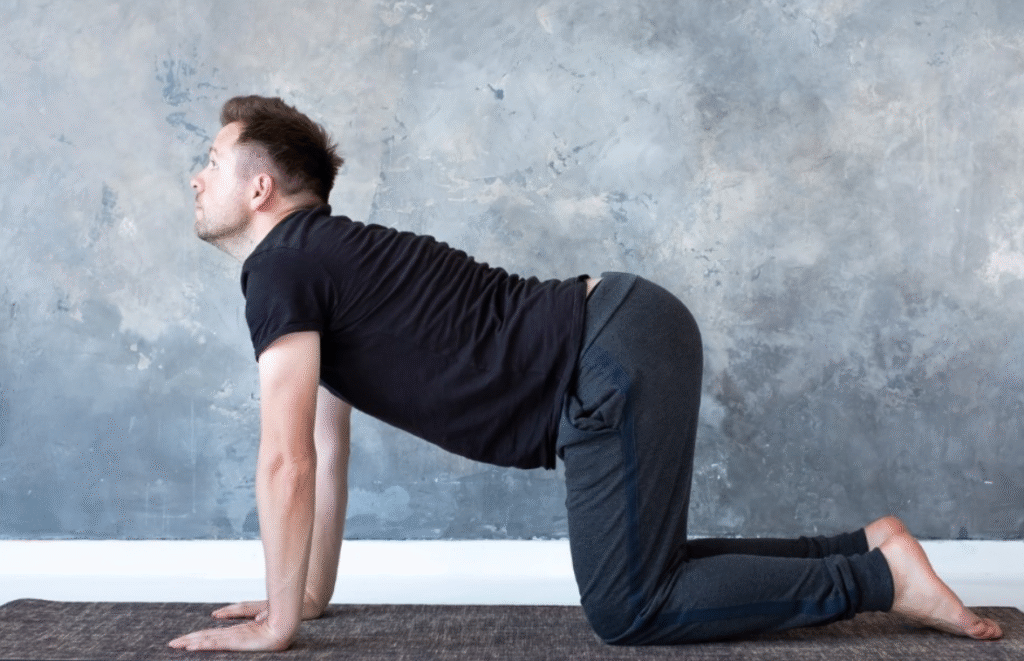
The pose is named after the gentle arching of a cow’s back and is characterized by lifting the tailbone and chest while pressing the hips downward, creating a natural concave curve in the spine. Its counterpart, Marjaryasana (Cat Pose), involves rounding the back upward, and together, these two poses form the Cat-Cow Flow, a staple in yoga warm-ups and spinal health routines.
Historical Background
Yoga, originating in ancient India over 5,000 years ago, emphasized physical postures (asanas) for overall wellness. like many foundational poses, was historically used to maintain spinal health, promote flexibility, and balance energy flow through the body. Though simple, its roots are tied to the Ayurvedic principle of aligning the body and mind, helping practitioners maintain vitality and prevent physical stagnation.
How to Perform Step-by-Step Guide
gentle pose that can be performed by almost anyone, including beginners. Here’s a detailed guide:
Step 1: Begin in Tabletop Position
-
Place your hands directly under your shoulders and knees under your hips.
-
Spread your fingers wide and press firmly into the mat.
-
Keep your neck in a neutral position, gazing at the floor.
Step 2: Inhale and Move into Bitilasana (Cow Pose)
-
Lift your tailbone toward the ceiling.
-
Drop your belly toward the mat.
-
Lift your chest and head, looking slightly upward.
-
Ensure your shoulders are away from your ears.
Step 3: Engage Your Core and Back Muscles
-
Feel the gentle stretch in your spine and abdominal muscles.
-
Avoid over-arching; the stretch should be comfortable.
Step 4: Pair with Marjaryasana (Cat Pose) for Maximum Effect
-
Exhale and round your spine upward into Cat Pose.
-
This Cat-Cow Flow improves spinal mobility and coordination.
-
Repeat 5–10 rounds for best results.
Benefits of Bitilasana
Despite its simplicity, Bitilasana provides numerous physical, mental, and emotional benefits:
1. Improves Spinal Flexibility
The arching movement stretches the spine, enhancing mobility in the vertebrae and reducing stiffness.
2. Strengthens Core and Back Muscles
Activating the abdominal and back muscles during the pose strengthens the core, supporting better posture and reducing lower back pain.
3. Reduces Stress and Anxiety
Focusing on deep breathing while moving through Bitilasana encourages mindfulness, reduces tension, and calms the nervous system.
4. Enhances Digestive Health
The gentle stretch of the abdominal region stimulates digestion and can help alleviate bloating.
5. Improves Circulation
The movement encourages blood flow to the spine, chest, and abdominal organs, enhancing overall vitality.
6. Prepares for Other Poses
Bitilasana is an excellent warm-up pose before performing advanced yoga postures such as Downward Dog, Cobra, or Bridge Pose.
Common Variations of Bitilasana
While the traditional Cow Pose is effective, there are variations to suit different needs:
1. Supported Bitilasana
-
Place a folded blanket under the knees for extra support.
-
Ideal for people with knee sensitivity.
2. Extended Cow Pose
-
Reach your arms slightly forward to deepen the stretch in the chest and shoulders.
3. Chair Cow Pose
-
For those unable to kneel, perform the pose seated on a chair.
-
Place feet flat on the floor and mimic the spine movements.
Tips for Practicing Bitilasana Safely
To gain the most benefit and avoid injury, consider the following tips:
-
Move slowly and mindfully; avoid jerky movements.
-
Engage your abdominal muscles to protect the lower back.
-
Keep shoulders away from the ears to prevent tension.
-
Breathe deeply with each movement: inhale for Cow, exhale for Cat.
-
Avoid hyperextending the neck; keep it long and gentle.
Common Mistakes to Avoid
Even in a simple pose like Bitilasana, beginners often make small errors:
-
Arching the back too much: This can strain the lumbar spine.
-
Dropping the head too low or lifting too high: Maintain a neutral neck.
-
Hands not aligned with shoulders or knees not under hips: Causes imbalance.
-
Holding the pose without breathing: Reduces effectiveness and increases tension.
Bitilasana for Different Populations
1. Beginners
-
A gentle introduction to spinal movements.
-
Recommended 3–5 rounds daily.
2. Pregnant Women
-
Can help relieve back stiffness and improve posture.
-
Avoid excessive arching of the lower back.
3. Seniors
-
Enhances mobility and reduces risk of stiffness.
-
Perform slowly with support under the knees if needed.
4. Desk Workers
-
Counteracts prolonged sitting and reduces tension in the back and shoulders.
Integrating Bitilasana into Daily Routine
Bitilasana is best practiced as part of a morning or evening yoga routine. Here’s a suggested sequence:
-
Start with gentle stretches: Neck rolls, shoulder shrugs.
-
Perform 5–10 rounds of Cat-Cow Flow.
-
Move to seated stretches: Forward folds, side bends.
-
Finish with Savasana for relaxation.
Regular practice keeps the spine healthy, flexible, and stress-free.
The Spiritual Significance of Bitilasana
In yogic philosophy, every asana influences the flow of prana (life force) in the body. Bitilasana:
-
Opens the heart chakra (Anahata) through chest lifting.
-
Encourages mindfulness and body awareness.
-
Promotes harmonious energy flow, balancing body and mind.
Combining Bitilasana with Other Poses
For a holistic yoga practice, Bitilasana pairs well with:
-
Marjaryasana (Cat Pose) – the natural companion.
-
Balasana (Child’s Pose) – for counter-stretch and relaxation.
-
Adho Mukha Svanasana (Downward Dog) – to deepen spinal flexibility.
-
Bhujangasana (Cobra Pose) – for enhanced back strength.
Conclusion
Bitilasana, or Cow Pose, may seem simple, but its benefits are profound and far-reaching. From enhancing spinal flexibility to reducing stress and improving digestion, this foundational pose proves that yoga’s true power often lies in its simplicity. By practicing Bitilasana mindfully, you honor your body, calm your mind, and create a pathway to holistic well-being. Whether you are a beginner or an experienced yogi, incorporating Bitilasana into your daily routine can lay a strong foundation for a healthier, more balanced life.