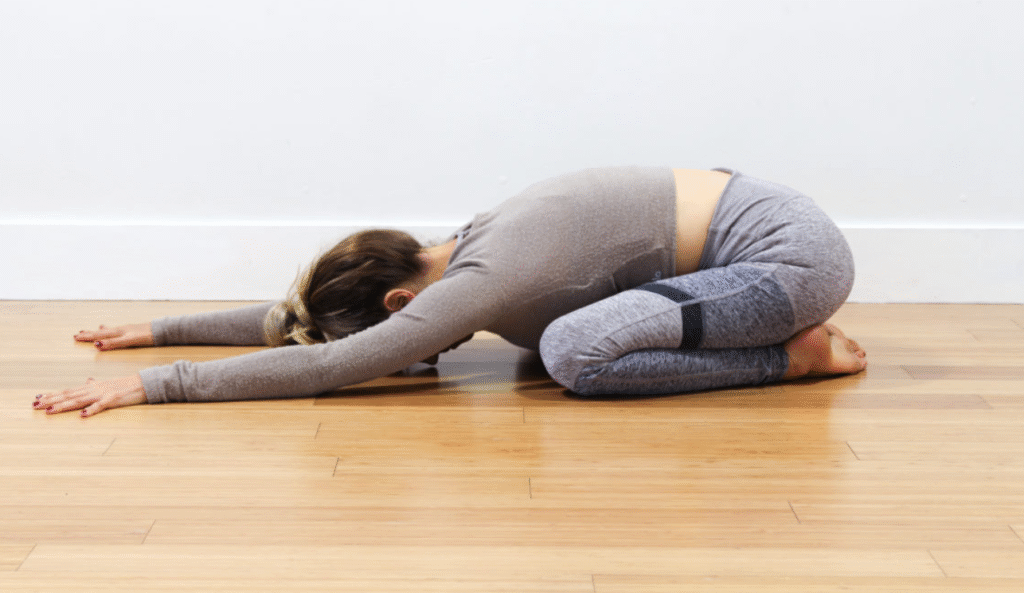
BALASANA
Balasana is a forward-folding, kneeling pose in which the torso rests over the thighs while the forehead touches the mat. The position promotes introspection, surrender, and relaxation. Because of its grounding nature, Balasana helps calm the nervous system and reduces physical and mental fatigue.
It is commonly included in Hatha Yoga, Vinyasa Yoga, Yin Yoga, and Restorative Yoga practices. Despite its simplicity, Balasana is considered a powerful posture for healing and restoration.
How to Perform Balasana (Steps)
Follow these steps to practice Balasana correctly:
-
Start in Vajrasana
Kneel on the yoga mat with your knees together or slightly apart. Sit back on your heels. -
Lower Your Upper Body
Gently bend forward from your hips, bringing your chest toward your thighs. -
Rest Your Forehead
Place your forehead on the mat. If it doesn’t reach the floor comfortably, use a cushion or folded blanket. -
Arm Position
-
Stretch your arms forward with palms facing down for a deeper stretch, or
-
Place arms alongside the body with palms facing upward for relaxation.
-
-
Relax and Breathe
Close your eyes and take slow, deep breaths. Stay in the pose for 30 seconds to 2 minutes, or longer if comfortable. -
Release Slowly
Inhale and gently lift your torso back to the starting position.
Benefits of Balasana

Balasana offers a wide range of physical, mental, and emotional benefits:
1. Relieves Stress and Anxiety
Balasana calms the mind by reducing tension in the nervous system. The gentle forward fold encourages introspection and emotional release.
2. Stretches the Spine and Back
This pose gently elongates the spine, relieving stiffness in the neck, shoulders, and lower back—especially beneficial for people who sit for long hours.
3. Improves Digestion
The pressure on the abdomen stimulates digestive organs and improves digestion when practiced regularly.
4. Reduces Fatigue
Balasana rejuvenates the body and mind, making it ideal during breaks in a yoga session or after a tiring day.
5. Enhances Blood Circulation
Gentle compression and relaxation improve blood flow to the head and internal organs.
6. Supports Emotional Healing
The pose promotes a sense of safety, surrender, and comfort, helping with emotional imbalance and mental exhaustion.
Balasana for Mental Health
Balasana is highly recommended for managing stress, anxiety, mild depression, and insomnia. The slow breathing combined with the folded posture activates the parasympathetic nervous system, which is responsible for relaxation. Practicing Balasana daily can improve focus, emotional stability, and overall mindfulness 🧘♂️.
Variations of Balasana
-
Wide-Knee Child’s Pose
Knees are spread wide, allowing deeper hip release and more space for the torso. -
Extended Child’s Pose
Arms stretched forward to intensify the stretch in shoulders and spine. -
Supported Child’s Pose
Use yoga blocks or bolsters under the chest or hips for maximum comfort and restoration.
Precautions and Contraindications
While Balasana is generally safe, keep these precautions in mind:
-
Avoid if you have knee injuries unless supported.
-
Pregnant women should practice with guidance and keep knees wide.
-
People with severe lower back issues should consult a yoga expert.
-
Do not force your forehead to the ground—comfort comes first.
Best Time to Practice Balasana
Balasana can be practiced:
-
During yoga sessions as a resting pose
-
After a stressful day
-
Before bedtime for relaxation
-
In the morning for grounding and mindfulness
It can be done on an empty stomach or with light meals.
Conclusion
Balasana may look simple, but its impact on the body and mind is profound. From calming the nervous system and stretching the spine to promoting emotional healing, this gentle yoga pose is a must for everyone—beginners and experienced yogis alike.
By practicing Balasana regularly, you invite peace, balance, and relaxation into your daily life. Whether you are seeking relief from stress, physical tension, or mental fatigue, Child’s Pose offers a safe and nurturing space to reconnect with yourself