Natarajasana (Dancer Pose): A Complete Guide to Balance, Grace, and Inner Strength
Introduction
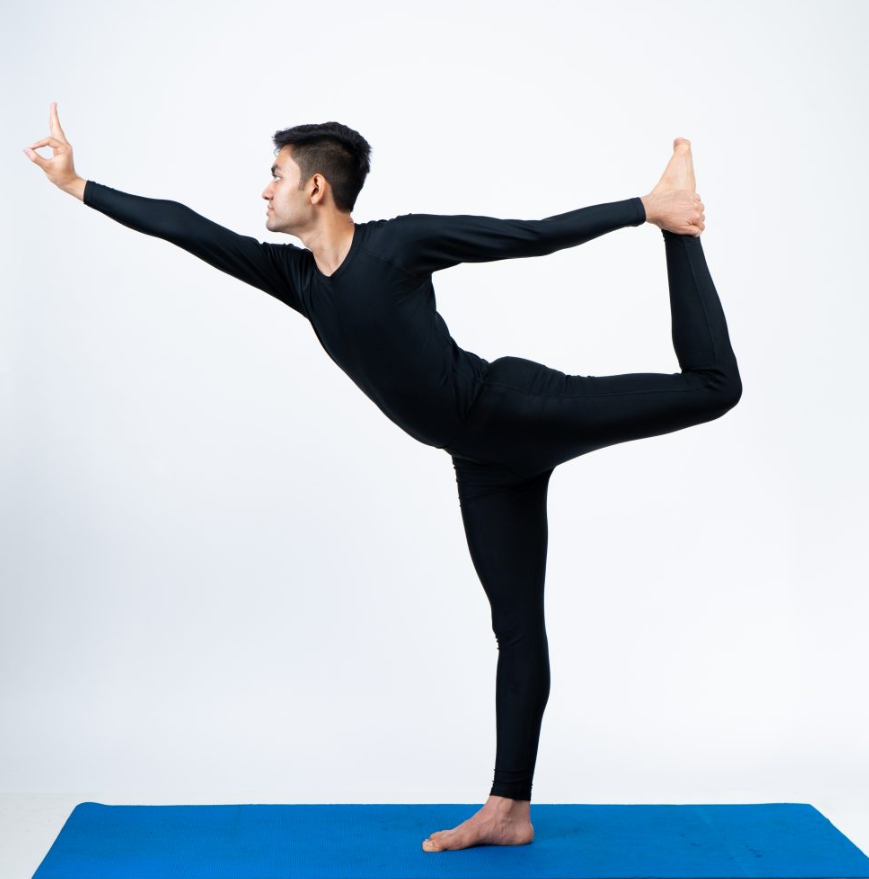
Natarajasana, widely known as Dancer Pose or Lord of the Dance Pose, is one of the most graceful and expressive standing yoga postures. It beautifully combines balance, strength, flexibility, and concentration, making it both physically challenging and spiritually uplifting. Inspired by Lord Shiva as Nataraja, the cosmic dancer, this asana symbolizes the rhythm of creation, preservation, and destruction in the universe.
Natarajasana is practiced in Hatha Yoga, Vinyasa Yoga, and Ashtanga Yoga, and it is admired for its aesthetic appeal as well as its deep therapeutic benefits. Though it may appear elegant and effortless, the pose demands focus, patience, and consistent practice.
Meaning and Etymology
The Sanskrit word Natarajasana is derived from:
-
Nata – dancer
-
Raja – king or lord
-
Asana – posture
Thus, Natarajasana translates to “Posture of the Lord of the Dance.” The pose reflects balance between strength and softness, control and surrender.
Mythological and Spiritual Significance
In Hindu philosophy, Lord Shiva as Nataraja performs the cosmic dance (Tandava), representing the eternal cycle of creation and destruction. Practicing Natarajasana encourages harmony between body and mind and reminds the practitioner of the dynamic balance present in life.
Energetically, the pose activates:
-
Anahata Chakra (Heart Chakra) – promoting openness and compassion
-
Muladhara Chakra (Root Chakra) – enhancing stability and grounding
Step-by-Step Practice of Natarajasana
Starting Position
-
Begin in Tadasana (Mountain Pose).
-
Stand tall with feet together and arms by your sides.
-
Distribute weight evenly on both feet.
-
Focus your gaze on a fixed point (Drishti).
Entering the Pose
-
Shift weight onto the left foot.
-
Bend the right knee and bring the heel toward the buttock.
-
Hold the right ankle with the right hand.
-
Extend the left arm forward or upward for balance.
Final Position
-
Inhale deeply and lift the chest.
-
Exhale and gently kick the right foot into the hand.
-
Lift the right thigh and open the chest.
-
Tilt the torso slightly forward.
-
Keep hips squared and spine elongated.
-
Hold the pose for 15–40 seconds with steady breathing.
Releasing the Pose
-
Slowly lower the raised leg.
-
Return to Tadasana.
-
Relax and repeat on the opposite side.
Breathing Technique
-
Inhale to lengthen the spine and lift the chest.
-
Exhale to deepen the stretch and stabilize balance.
-
Maintain slow, controlled breathing throughout the posture.
Physical Benefits of Natarajasana
1. Improves Balance and Coordination
Standing on one leg strengthens stabilizing muscles and enhances neuromuscular coordination.
2. Increases Flexibility
The pose stretches:
-
Quadriceps
-
Hip flexors
-
Shoulders
-
Chest
-
Spine
3. Strengthens the Lower Body
Natarajasana tones the ankles, calves, thighs, and knees.
4. Enhances Spinal Health
Backbend action improves spinal flexibility and posture.
5. Opens the Chest and Lungs
Chest expansion improves breathing capacity and oxygen intake.
Mental and Emotional Benefits
1. Enhances Focus and Concentration
Maintaining balance requires mental steadiness and awareness.
2. Reduces Stress and Anxiety
The pose calms the nervous system and releases mental tension.
3. Builds Confidence
Successfully holding the pose increases self-belief and inner strength.
Therapeutic Benefits
Natarajasana may be helpful for:
-
Mild back stiffness
-
Poor posture
-
Stress and fatigue
-
Weak ankles and knees
Always practice under guidance if used therapeutically.
Contraindications and Precautions
Avoid or modify Natarajasana if you have:
-
Severe knee or ankle injuries
-
Lower back pain
-
Shoulder injuries
-
Vertigo or balance disorders
-
Pregnancy (unless guided by a qualified instructor)
Never force the stretch.
Common Mistakes to Avoid
-
Overarching the lower back
-
Losing hip alignment
-
Leaning excessively forward
-
Holding the breath
-
Forcing balance without focus
Modifications and Variations
For Beginners
-
Use a wall or chair for support.
-
Hold a yoga strap around the foot.
-
Keep the raised leg lower.
For Advanced Practitioners
-
Lift the leg higher.
-
Reach both arms overhead to hold the foot.
-
Hold the pose for longer durations.
Preparatory Poses
Helpful poses before Natarajasana:
-
Tadasana
-
Virabhadrasana I
-
Bhujangasana
-
Ustrasana
Counter Poses
After Natarajasana, practice:
-
Uttanasana
-
Balasana
-
Tadasana
Natarajasana in Yoga Sequences
Natarajasana is often included:
-
In balance-focused flows
-
As a peak pose in Vinyasa sequences
-
In heart-opening practices
Spiritual Aspect of Natarajasana
Spiritually, Natarajasana teaches harmony between effort and surrender. Balancing on one leg while opening the heart symbolizes staying grounded while embracing life’s challenges with grace.
Tips for Safe and Effective Practice
-
Warm up thoroughly.
-
Fix your gaze on a steady point.
-
Engage the core muscles.
-
Practice regularly for improvement.
-
Stay patient and consistent.
Role of Natarajasana in Daily Life
The qualities developed in Natarajasana—focus, balance, grace, and resilience—help practitioners navigate daily challenges with calmness and confidence.
Conclusion
Natarajasana is a beautiful expression of strength, flexibility, and mindful balance. Inspired by the cosmic dance of Lord Shiva, this asana brings together physical vitality, mental clarity, and spiritual awareness. With regular practice, Natarajasana enhances posture, builds confidence, improves focus, and nurtures inner harmony.
Whether you are a beginner or an advanced yogi, practicing Natarajasana with awareness and devotion can transform both your yoga practice and your approach to life. Move with grace, breathe with intention, and allow the dancer within you to shine.
Leave a Reply