Parivrtta Trikonasana (Revolved Triangle Pose): A Complete Guide to Alignment, Benefits, and Yogic Insight
Introduction
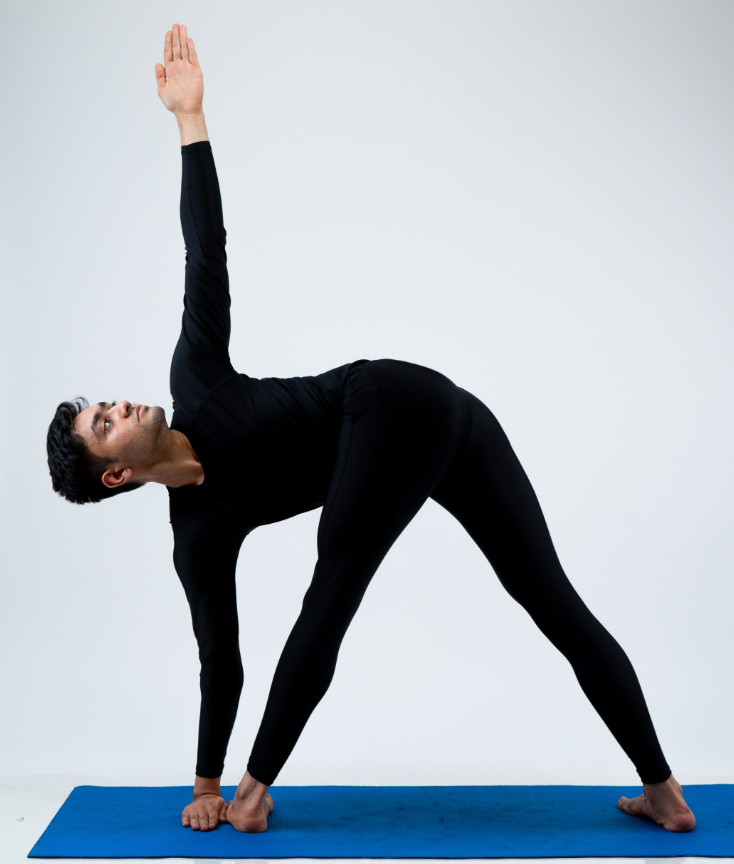
Parivrtta Trikonasana, also known as Revolved Triangle Pose, is a powerful standing yoga posture that combines a deep spinal twist with balance, strength, and flexibility. This asana challenges both the body and the mind, encouraging stability, focus, and inner awareness. Though it may appear complex at first, with proper guidance and consistent practice, Parivrtta Trikonasana becomes an energizing and transformative posture.
The pose is commonly practiced in Hatha Yoga, Ashtanga Yoga, and Vinyasa Yoga traditions and is often included in standing sequences after foundational poses like Trikonasana and Utthita Parsvakonasana.
Meaning and Etymology
The Sanskrit name Parivrtta Trikonasana is derived from:
-
Parivrtta – revolved or twisted
-
Trikona – triangle
-
Asana – posture
Together, the name describes a triangular shape created by the body while performing a deep spinal twist. This pose represents balance between grounding and expansion.
Significance of Parivrtta Trikonasana
Parivrtta Trikonasana symbolizes the cleansing and purifying effects of twisting postures. Twists are known to stimulate internal organs, improve circulation, and help detoxify the body. This asana also develops discipline, patience, and mental focus as it requires precise alignment and breath awareness.
Energetically, the pose activates the Manipura Chakra (Solar Plexus) and Anahata Chakra (Heart), supporting confidence, vitality, and emotional balance.
Step-by-Step Practice of Parivrtta Trikonasana
Starting Position
-
Begin in Tadasana (Mountain Pose).
-
Step the right foot back about 3–4 feet.
-
Keep the left foot pointing forward and turn the right foot slightly inward.
-
Square the hips and shoulders toward the front of the mat.
-
Engage the legs and lengthen the spine.
Entering the Pose
-
Inhale and raise both arms up to shoulder height.
-
Exhale and rotate the torso to the left.
-
Inhale to lengthen the spine.
-
Exhale and hinge forward from the hips.
-
Place the right hand on the floor, block, or outside the left foot.
-
Extend the left arm straight upward.
Final Alignment
-
Keep both legs straight and strong.
-
Ground the back heel firmly into the mat.
-
Rotate the chest upward while maintaining balance.
-
Gaze upward or to the side, keeping the neck relaxed.
-
Hold the pose for 20–40 seconds, breathing steadily.
Releasing the Pose
-
Inhale and gently lift the torso.
-
Lower the arms.
-
Step back to Tadasana.
-
Repeat on the opposite side.
Breathing Technique
Breath awareness is essential in Parivrtta Trikonasana:
-
Inhale to lengthen the spine.
-
Exhale to deepen the twist.
-
Maintain slow, even breathing throughout the posture.
Physical Benefits of Parivrtta Trikonasana
1. Improves Spinal Mobility
The deep twist enhances flexibility of the spine and improves posture.
2. Strengthens the Legs
The pose builds strength in the thighs, calves, knees, and ankles.
3. Enhances Digestive Function
Twisting compresses and releases abdominal organs, stimulating digestion and detoxification.
4. Improves Balance and Coordination
The pose demands stability, improving neuromuscular coordination.
5. Expands the Chest and Lungs
Opening the chest enhances breathing capacity and lung health.
Mental and Emotional Benefits
1. Enhances Concentration
Balancing and twisting together require mental focus and awareness.
2. Reduces Stress
Twists help release tension from the spine and nervous system.
3. Promotes Mental Clarity
Improved circulation to the brain enhances alertness and calmness.
Therapeutic Applications
Parivrtta Trikonasana may help with:
-
Mild back stiffness
-
Digestive sluggishness
-
Fatigue
-
Poor posture
Always practice under guidance if using it therapeutically.
Contraindications and Precautions
Avoid or modify the pose if you have:
-
Severe back or spinal injuries
-
Herniated disc
-
High blood pressure
-
Neck issues
-
Pregnancy (unless supervised)
Do not force the twist beyond comfort.
Common Mistakes to Avoid
-
Collapsing the chest
-
Losing hip alignment
-
Locking the knees
-
Forcing the twist
-
Holding the breath
Focus on length before rotation.
Modifications and Variations
For Beginners
-
Use yoga blocks for hand support.
-
Keep the gaze downward.
-
Slightly bend the front knee.
For Advanced Practitioners
-
Deepen the twist gradually.
-
Hold the pose longer.
-
Explore binds if flexibility allows.
Parivrtta Trikonasana in Yoga Sequences
This pose is commonly practiced:
-
After standing poses
-
In detoxifying sequences
-
In balance-focused flows
-
Before seated twists
Spiritual and Energetic Aspects
Parivrtta Trikonasana encourages inner purification and balance. Twisting poses are believed to remove energetic blockages and promote free flow of prana. The pose teaches surrender, stability, and self-discipline.
Tips for Safe Practice
-
Warm up before twisting.
-
Keep hips squared.
-
Use props to maintain alignment.
-
Practice slowly and mindfully.
-
Listen to your body.
Conclusion
Parivrtta Trikonasana is a dynamic and energizing yoga posture that combines strength, flexibility, balance, and awareness. Regular practice supports spinal health, digestion, mental clarity, and emotional balance. Though challenging, the pose becomes accessible through patience, breath control, and proper alignment.
By practicing Parivrtta Trikonasana mindfully, yogis can experience not only physical benefits but also a deeper sense of inner clarity and harmony. Let the twist cleanse your body, sharpen your mind, and energize your spirit.
Leave a Reply