Introduction
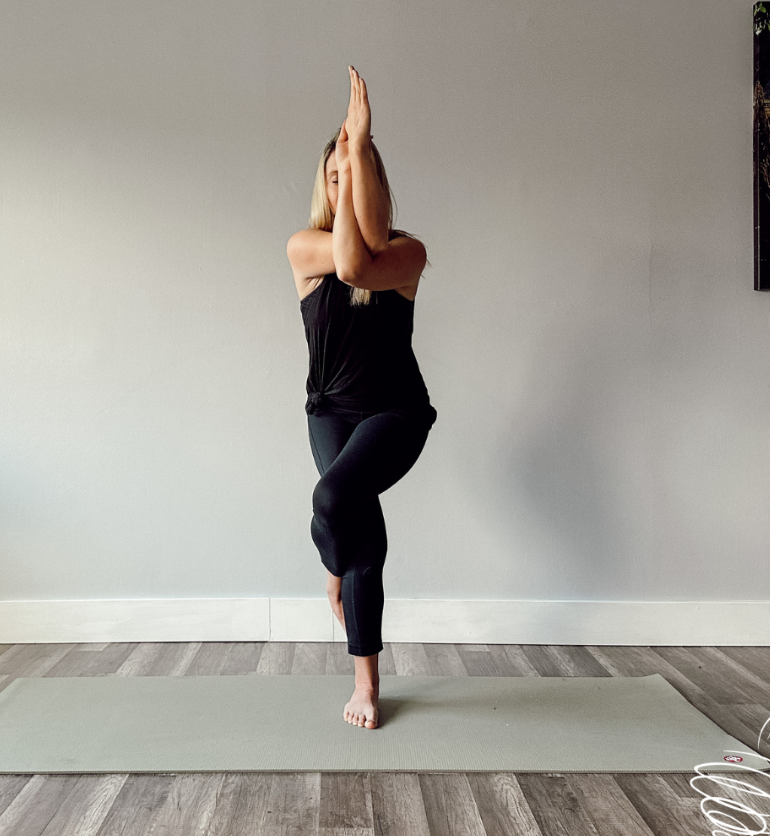
Garudasana, popularly known as Eagle Pose, is a graceful yet powerful standing yoga posture that emphasizes balance, concentration, and coordination. Inspired by Garuda, the mythical eagle and vehicle of Lord Vishnu, this asana symbolizes strength, courage, and sharp awareness. While may appear simple at first glance, it requires deep mental focus, physical stability, and controlled breathing.
In modern life, where stress, lack of balance, and mental distraction are common, serves as a grounding practice that unites body and mind. It strengthens the legs, stretches the shoulders and upper back, improves posture, and enhances mental clarity. This asana is widely included in yoga sequences for balance training, flexibility, and mindfulness.
This blog explores Garudasana in detail, including its meaning, origin, steps, benefits, variations, precautions, and relevance in daily life.
Meaning and Symbolism
The Sanskrit word Garuda refers to an eagle, a divine bird in Hindu mythology, and Asana means posture. Garuda is known as the king of birds and represents power, speed, vigilance, and devotion. Garudasana reflects these qualities by encouraging the practitioner to cultivate inner strength, stability, and focused awareness.
Symbolically, the entwined arms and legs in Garudasana represent the unification of opposing forces within the body and mind. Practicing this pose helps release emotional knots and mental rigidity, allowing energy to flow freely.
Origin and Yogic Context
Garudasana is mentioned in traditional yogic practices and has been adapted widely in modern Hatha and Vinyasa yoga styles. Though not described in great detail in ancient scriptures, it has been passed down through yogic tradition as a posture that enhances balance and neuromuscular coordination.
In yogic philosophy, balance postures like Garudasana are believed to improve concentration and stimulate the nervous system, making them ideal for cultivating mindfulness.
How to Practice (Steps)
-
Stand straight in Tadasana with feet together.
-
Shift your weight onto the left foot.
-
Bend the right knee and wrap the right leg over the left thigh.
-
If possible, hook the right foot behind the left calf.
-
Extend your arms forward.
-
Cross the left arm over the right at the elbows.
-
Bend the elbows and bring the palms together.
-
Lift the elbows slightly while lowering the shoulders.
-
Focus your gaze at a fixed point.
-
Hold the pose for 15–30 seconds with steady breathing.
-
Release gently and repeat on the other side.
Breathing Technique
Breathing in should be smooth and controlled. Inhale deeply to maintain length in the spine and exhale to stabilize the posture. Conscious breathing helps maintain balance and calms the mind.
Physical Benefits
1. Improves Balance and Coordination
Garudasana enhances body awareness and neuromuscular coordination.
2. Strengthens Lower Body
The pose tones the thighs, calves, hips, and ankles.
3. Stretches Shoulders and Upper Back
The arm position deeply stretches the shoulders, trapezius, and upper back muscles.
4. Improves Joint Mobility
Regular practice increases flexibility in ankles, knees, hips, shoulders, and wrists.
5. Enhances Posture
promotes spinal alignment and postural awareness.
Mental and Emotional Benefits
1. Enhances Concentration
Maintaining balance improves focus and mindfulness.
2. Reduces Stress and Anxiety
Controlled breathing and stillness calm the nervous system.
3. Builds Inner Confidence
Mastering balance postures cultivates self-confidence and mental strength.
Nervous System
Garudasana stimulates the nervous system by engaging multiple muscle groups simultaneously. This improves coordination between brain and body, enhancing reflexes and mental alertness.
Garudasana and Energy Flow
From a yogic perspective, Garudasana helps remove energetic blockages in the arms and legs. It supports the smooth flow of prana through the nadis, promoting vitality and balance.
Variations
1. Beginner
Use toes on the floor instead of hooking the foot.
2. Chair
Performed while sitting, suitable for elderly or those with balance issues.
3. Arm-Only
Focuses on shoulder stretch without leg balance.
Precautions and Contraindications
-
Avoid if you have recent knee or ankle injuries.
-
People with shoulder pain should practice gently.
-
Pregnant women should practice under expert supervision.
-
Do not force the posture.
Common Mistakes to Avoid
-
Collapsing the chest
-
Holding the breath
-
Losing focus
-
Locking the standing knee
Daily Life
In a fast-paced lifestyle filled with distractions, teaches stillness, balance, and patience. It is particularly beneficial for students, office workers, and athletes who need better coordination and focus
Beginners
-
Practice near a wall for support.
-
Start with short holds.
-
Keep your gaze steady.
-
Focus on breath awareness.
Scientific Perspective
Research on balance-based exercises shows improved neuromuscular coordination, joint stability, and cognitive focus. Garudasana combines physical balance with mental engagement, making it beneficial for overall health.
Garudasana Compared to Other Balance Poses
Compared to Vrikshasana, Garudasana offers deeper joint engagement and shoulder stretching, making it more challenging yet rewarding.
Conclusion
Garudasana is a powerful yoga posture that integrates balance, strength, flexibility, and mental focus. Inspired by the majestic eagle, this asana encourages practitioners to rise above distractions and cultivate inner stability.
With regular practice, Garudasana enhances posture, concentration, emotional balance, and physical coordination. Whether practiced by beginners or advanced yogis, Garudasana offers profound benefits for holistic well-being and mindful living.
Leave a Reply