Introduction
Yoga is a holistic science that nurtures the body, mind, and soul. Among the many seated forward-bending postures, Janu Sirsasana holds a special place due to its calming nature and therapeutic effects. Often practiced in Hatha, Ashtanga, and Vinyasa yoga, Janu Sirsasana gently stretches the body while promoting inner awareness and relaxation.
This asana is particularly beneficial for improving flexibility, digestion, and mental focus. It combines a physical forward bend with a subtle twist, making it both grounding and rejuvenating. Janu Sirsasana is suitable for practitioners of all levels when performed mindfully and with proper alignment.
In this blog, we will explore the meaning, origin, step-by-step practice, benefits, precautions, variations, and spiritual significance of Janu Sirsasana in detail.
Meaning and Origin
The Sanskrit term “Janu Sirsasana” is derived from three words:
-
Janu – knee
-
Sirsa – head
-
Asana – posture
Thus, Janu Sirsasana literally means “Head-to-Knee Pose.”
This posture symbolizes humility, surrender, and introspection. It is traditionally practiced toward the end of an asana session to calm the nervous system and prepare the body for meditation and pranayama.
Janu Sirsasana is mentioned in classical yoga texts as a seated forward bend that improves physical health and mental clarity.
Understanding the Pose
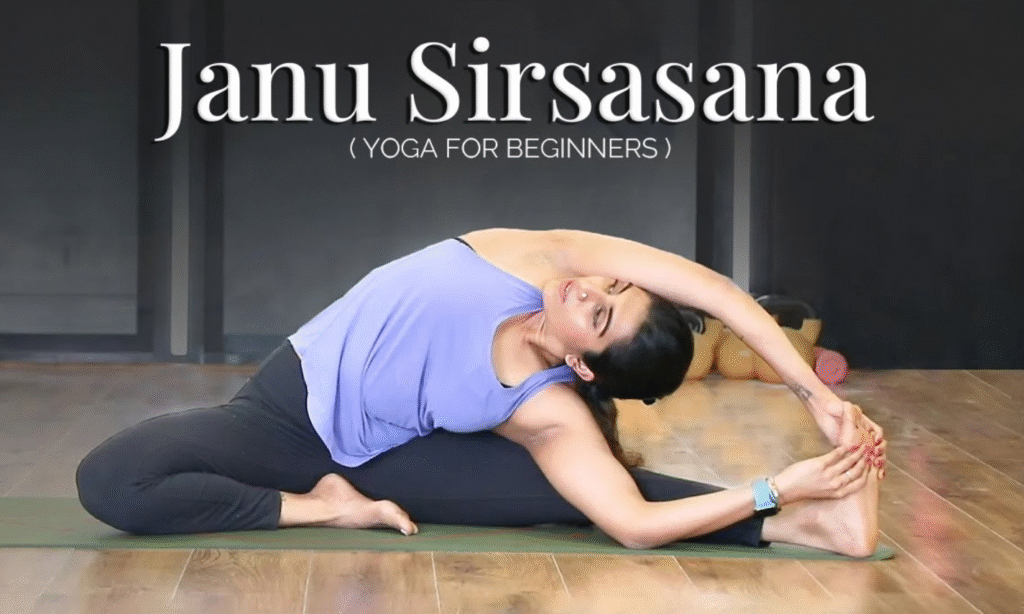
Janu Sirsasana is a seated forward-bending posture that stretches one side of the body at a time. One leg remains extended while the other leg is bent with the sole of the foot placed against the inner thigh of the extended leg.
This asymmetrical position:
-
Improves flexibility
-
Corrects postural imbalances
-
Stimulates internal organs
The pose encourages inward focus, helping practitioners slow down and connect with their breath.
Step-by-Step Practice of Janu Sirsasana
Starting Position
-
Sit on the mat in Dandasana (Staff Pose) with both legs extended.
-
Keep your spine erect, shoulders relaxed, and hands resting beside the hips.
-
Take a few deep breaths to center yourself.
Entering the Pose
-
Bend your right knee and place the sole of the right foot against the inner left thigh.
-
Allow the right knee to gently move toward the floor.
-
Keep the left leg straight and active, toes pointing upward.
-
Inhale and raise both arms overhead, lengthening the spine.
-
Exhale and slowly bend forward from the hips toward the extended leg.
-
Reach for the left shin, ankle, or foot—without forcing.
Final Position
-
Bring your forehead toward the knee or shin.
-
Keep the spine long and chest open.
-
Relax the shoulders and neck.
-
Hold the pose for 20–40 seconds, breathing deeply.
Releasing the Pose
-
Inhale and slowly come back up.
-
Extend both legs.
-
Repeat on the opposite side.
Breathing in Janu Sirsasana
Breathing should be slow and controlled:
-
Inhale to lengthen the spine.
-
Exhale to deepen the forward bend.
-
Focused breathing calms the mind and relaxes the body.
Physical Benefits of Janu Sirsasana
1. Improves Flexibility
Stretches:
-
Hamstrings
-
Calves
-
Spine
-
Hips and groin
2. Strengthens the Spine
Regular practice helps maintain spinal health and correct posture.
3. Stimulates Digestive Organs
The forward bend massages abdominal organs, improving digestion and metabolism.
4. Enhances Circulation
Improves blood flow to pelvic organs and lower limbs.
5. Relieves Menstrual Discomfort
Helps ease menstrual pain and supports reproductive health when practiced gently.
Mental and Emotional Benefits
1. Reduces Stress and Anxiety
The calming nature of the pose relaxes the nervous system.
2. Improves Focus and Concentration
Encourages mindfulness and mental clarity.
3. Promotes Emotional Balance
Forward bends are known for their grounding and introspective effects.
Chakra Stimulation
Janu Sirsasana primarily stimulates:
-
Muladhara Chakra (Root Chakra) – grounding and stability
-
Svadhisthana Chakra (Sacral Chakra) – emotional balance and creativity
Preparatory Poses
Practice these poses before Janu Sirsasana:
-
Dandasana (Staff Pose)
-
Baddha Konasana (Bound Angle Pose)
-
Paschimottanasana (Seated Forward Bend)
-
Upavistha Konasana (Wide-Angle Seated Pose)
Contraindications and Precautions
Avoid or modify Janu Sirsasana if you have:
-
Severe lower back injury
-
Hamstring tear
-
Knee injury
Pregnant women should practice under expert supervision.
Never force the body into the pose. Use props like cushions or yoga straps if needed.
Common Mistakes to Avoid
-
Rounding the spine excessively
-
Pulling forcefully on the foot
-
Locking the extended knee
-
Holding the breath
Mindful alignment prevents injury and enhances benefits.
Modifications and Variations
Beginner Modification
-
Sit on a folded blanket for hip support.
-
Use a strap around the foot of the extended leg.
Advanced Variation
-
Hold the foot with both hands.
-
Deepen the forward fold with relaxed breathing.
Janu Sirsasana in Yoga Sequences
This pose is commonly practiced in:
-
Hatha yoga sessions
-
Ashtanga primary series
-
Restorative yoga sequences
It is ideal toward the end of practice for cooling and relaxation.
Therapeutic Applications
Janu Sirsasana may help manage:
-
High blood pressure (when practiced gently)
-
Insomnia
-
Mild depression
-
Digestive disorders
Always consult a yoga therapist for therapeutic use.
Spiritual Significance
Janu Sirsasana encourages:
-
Humility and surrender
-
Turning inward
-
Self-awareness and acceptance
The pose symbolizes the act of bowing to one’s inner wisdom.
Conclusion
Janu Sirsasana is a powerful yet gentle yoga posture that nourishes both the body and mind. Its calming nature makes it ideal for reducing stress, improving flexibility, and cultivating mindfulness. With consistent practice and proper alignment, this pose can become a valuable part of any yoga routine.
Whether you are a beginner or an experienced practitioner, Janu Sirsasana invites you to slow down, breathe deeply, and connect
Leave a Reply