Introduction
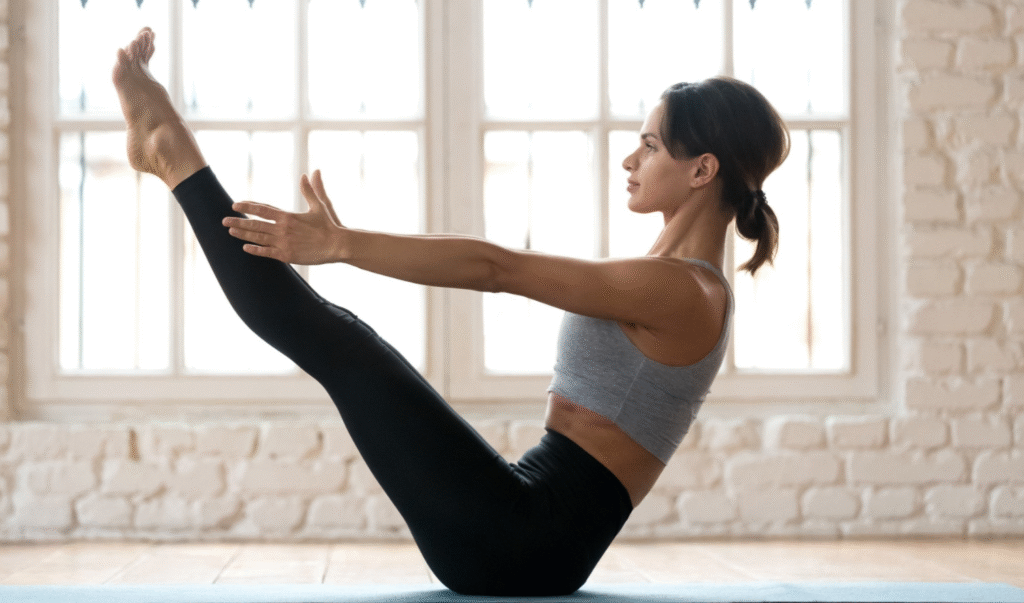
widely known as Boat Pose, is one of the most effective and empowering yoga postures for building core strength and mental resilience. In this pose, the body balances on the sitting bones, forming a “V” shape that resembles a boat floating steadily on water. Though simple in appearance, challenges the abdominal muscles, spine, hips, and mind simultaneously.
In modern life, weakened core muscles and poor posture are common due to long hours of sitting and limited physical activity. Navasana directly addresses these issues by strengthening the abdominal region and improving overall body alignment. It is practiced in traditional Hatha Yoga, Ashtanga Yoga, and contemporary fitness yoga routines because of its powerful and visible results.
Meaning and Etymology
The Sanskrit word “Nava” means boat, and “Asana” means pose or posture. Thus, Navasana literally translates to Boat Pose. The name symbolizes balance and steadiness in motion, just like a boat remains afloat despite waves.
On a deeper level, Navasana represents the balance between effort and relaxation. The practitioner must engage strength while maintaining calmness, teaching an important yogic lesson about stability in challenging situations.
Historical and Yogic Significance
Navasana has been practiced for centuries as part of classical yoga systems. Ancient yogis believed that a strong core was essential for advanced yogic practices such as pranayama, bandhas, and meditation. The pose activates Manipura Chakra, the energy center associated with confidence, willpower, and inner strength.
In yogic philosophy, is seen as a posture that ignites inner fire (Agni), enhances discipline, and builds self-control.
Importance in Yoga Practice
Navasana is considered a foundational pose for developing:
-
Core stability
-
Spinal strength
-
Balance and coordination
-
Mental endurance
A strong core supports every yoga posture and daily movement, reducing the risk of injuries and improving posture. Mentally, holding Navasana trains the mind to remain calm and focused under pressure.
Preparatory Poses for Navasana
Preparing the body before practicing Navasana helps avoid strain and improves performance. Recommended preparatory poses include:
-
Dandasana (Staff Pose) – Improves posture and alignment
-
Bhujangasana (Cobra Pose) – Strengthens the spine
-
Setu Bandhasana (Bridge Pose) – Activates core muscles
-
Ardha Navasana (Half Boat Pose) – Builds abdominal strength
-
Supta Padangusthasana – Stretches hamstrings
These poses warm up the core and improve flexibility.
Step-by-Step Method of Practicing
-
Sit on the yoga mat in Dandasana, with legs extended forward.
-
Bend your knees and place your feet flat on the floor.
-
Lean back slightly, keeping the spine straight and chest lifted.
-
Lift both feet off the ground and balance on your sitting bones.
-
Straighten the legs slowly to form a “V” shape with the body.
-
Extend your arms forward, parallel to the floor.
-
Engage the abdominal muscles and keep the neck relaxed.
-
Hold the pose for 20–60 seconds, breathing normally.
-
Gently release the pose and relax.
Breathing Technique
Breathing is essential for stability in Navasana. Inhale deeply to lengthen the spine and lift the chest. Exhale slowly while engaging the core muscles. Smooth and controlled breathing helps maintain balance and prevents unnecessary tension.
Avoid holding the breath, as this can increase strain and reduce endurance.
Physical Benefits of Navasana
Regular practice of Navasana offers numerous physical benefits:
-
Strengthens abdominal and core muscles
-
Tones thighs, hips, and lower back
-
Improves posture and spinal alignment
-
Enhances balance and coordination
-
Stimulates digestive organs
-
Boosts metabolism
-
Helps reduce abdominal fat when combined with proper diet
Mental and Emotional Benefits
Navasana also provides powerful mental benefits:
-
Improves focus and concentration
-
Builds mental strength and resilience
-
Reduces stress and anxiety
-
Enhances self-confidence
-
Develops patience and discipline
Holding the pose teaches practitioners to remain calm and steady even when the body feels challenged.
Therapeutic Benefits of Navasana
When practiced correctly, Navasana can be helpful in managing:
-
Weak core muscles
-
Digestive sluggishness
-
Poor posture
-
Mild lower back discomfort
-
Sedentary lifestyle-related stiffness
It is often included in yoga therapy programs to strengthen the abdominal region and improve overall vitality.
Common Mistakes to Avoid
To gain maximum benefit, avoid these common mistakes:
-
Rounding the back
-
Collapsing the chest
-
Straining the neck or shoulders
-
Holding the breath
-
Forcing straight legs without sufficient strength
Maintaining proper alignment is key to safe practice.
Contraindications and Precautions
Navasana should be avoided or practiced with caution by individuals with:
-
Severe lower back pain
-
Hernia
-
Recent abdominal surgery
-
Pregnancy
-
High blood pressure (practice only under guidance)
Always consult a qualified yoga teacher if you have health concerns.
Variations and Modifications
Beginners and those with limited strength can try these modifications:
-
Keep knees bent
-
Hold the thighs instead of extending arms
-
Practice Ardha Navasana
-
Sit on a folded blanket for better balance
Advanced practitioners may increase the hold time or practice dynamic movements.
Yogic Philosophy
Symbolically, teaches the art of balance in life. Just as a boat moves forward while maintaining stability, practitioners learn to stay centered amidst challenges. The posture emphasizes self-control, determination, and inner strength.
Incorporating Navasana into Daily Practice
practiced in the morning to energize the body or in the evening as part of a strengthening sequence. It pairs well with forward bends and relaxation poses such as Shavasana.
Practicing 2–3 rounds daily can significantly improve core strength and endurance.
Conclusion
powerful and transformative yoga posture that strengthens the body, sharpens the mind, and builds inner confidence. Though challenging, its rewards are long-lasting when practiced with awareness, patience, and proper breathing.
By including in your yoga routine, you develop not only a strong core but also the mental stability needed to navigate life’s challenges with balance and grace
Leave a Reply