The Ultimate Relaxation Yoga Pose
In the modern fast-paced world, stress has become an inseparable part of our daily lives. Long working hours, sedentary lifestyles, mental pressure, and poor posture contribute to multiple physical and psychological health issues. Yoga, the ancient science of well-being, offers a wide range of practices to restore balance, promote flexibility, and enhance inner peace. Among these, , also known as Crocodile Pose, is an exceptional asana for relaxation, spinal health, and stress relief.
In this blog, we will explore every aspect of from its definition and techniques to its numerous benefits, variations, and precautions. Whether you are a beginner or an advanced yogi, is a simple yet powerful pose that can positively transform your health and well-being.
1.Introduction , also known as the Crocodile Pose, is a prone yoga posture designed for relaxation, improved digestion, and spinal alignment. Its name originates from the Sanskrit word “Makara”, which means crocodile. Just as a crocodile rests calmly on the riverbank with minimal effort, this pose encourages the body and mind to enter a state of deep rest.
Unlike strenuous asanas that require strength or balance, Makrasana is gentle, making it suitable for people of all ages. It is especially beneficial for individuals suffering from lower back pain, stress, and poor posture.
2. Meaning and Origin
The term comes from two Sanskrit words:
-
Makara – Crocodile
-
Asana – Pose or Posture
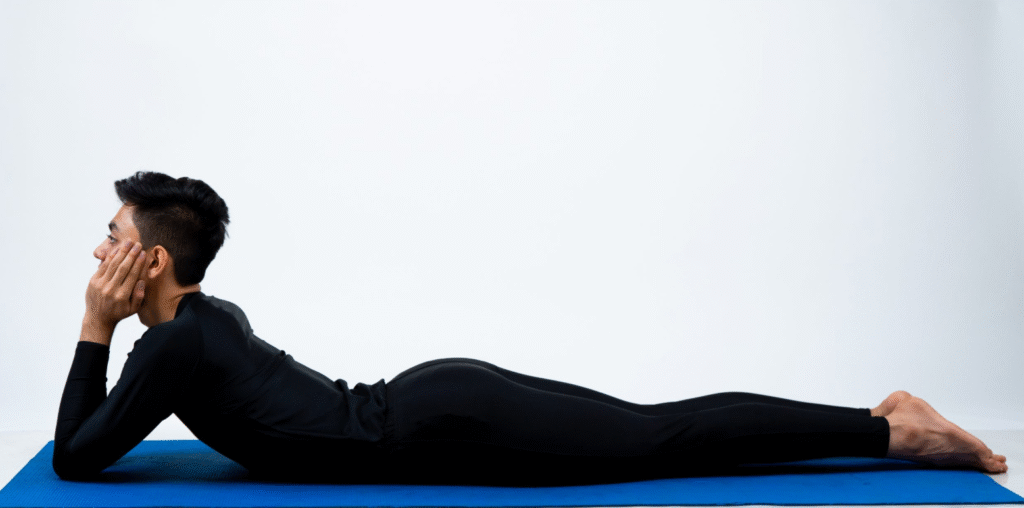
The pose is named after the crocodile because it resembles the resting posture of a crocodile lying flat on the ground. In this position, the body remains elongated and supported, which aids in relaxation and stress release.
Makrasana is mentioned in classical yoga texts as a restorative posture that balances energy, strengthens the lower back, and prepares the body for meditation. Traditionally, yogis used it to relax after performing more demanding asanas or pranayama practices.
3. Steps to Perform Makrasana
Performing Makrasana correctly ensures maximum benefit and prevents strain. Here is a step-by-step guide:
Step 1: Preparation
-
Find a quiet place and use a yoga mat for comfort.
-
Lie down on your stomach with your legs extended backward and toes pointing outward.
-
Keep your forehead resting gently on the floor.
Step 2: Arm Placement
-
Place your elbows beneath your shoulders and rest your forearms on the floor.
-
Bring your hands together and interlace your fingers or rest them parallel, creating a support for your head.
Step 3: Relax Your Body
-
Allow your body to sink gently into the floor.
-
Keep your spine straight and avoid arching your back unnecessarily.
-
Relax your shoulders, neck, and facial muscles.
Step 4: Leg Position
-
Keep your legs close together and your toes relaxed.
-
Press the tops of your feet gently into the mat.
Step 5: Breathing
-
Close your eyes and take slow, deep breaths.
-
Focus on abdominal breathing, allowing your belly to rise and fall naturally.
Step 6: Duration
-
Beginners can hold the pose for 1-2 minutes.
-
Advanced practitioners can stay for 5-10 minutes, or longer, depending on comfort.
Step 7: Exiting the Pose
-
Slowly lift your head and arms, roll onto your side, and gently come to a seated position.
-
Avoid sudden movements to prevent dizziness or strain.
4. Breathing Techniques During Makrasana
Breathing is a vital aspect of Makrasana, as it enhances relaxation and improves oxygen flow. Here are some techniques to practice:
-
Diaphragmatic Breathing
-
Inhale deeply through the nose, expanding your abdomen.
-
Exhale slowly through the nose, letting your belly contract.
-
-
Alternate Nostril Breathing (Nadi Shodhana) – Optional
-
Helps balance energy and calm the nervous system while lying in Makrasana.
-
-
Mindful Breathing
-
Focus your attention on each inhale and exhale.
-
Observe the natural rhythm of your breath without forcing it.
-
5. Benefits of Makrasana
Makrasana provides a wide range of physical, mental, and emotional benefits:
Physical Benefits
-
Strengthens the Lower Back: Reduces tension and alleviates chronic lower back pain.
-
Improves Posture: Encourages spinal alignment and reduces slouching.
-
Enhances Digestion: Gentle abdominal pressure stimulates digestion and relieves constipation.
-
Relieves Joint Stress: Minimal strain on knees and hips makes it ideal for people with joint problems.
-
Boosts Circulation: Improves blood flow to the spine, abdomen, and chest.
Mental Benefits
-
Reduces Stress and Anxiety: Promotes deep relaxation and calms the nervous system.
-
Improves Sleep Quality: Can be practiced before bedtime to enhance restful sleep.
-
Encourages Mindfulness: Focus on breath and body sensations encourages present-moment awareness.
Therapeutic Benefits
-
Helps in Respiratory Disorders: Opens up the chest and improves lung capacity.
-
Alleviates Fatigue: Relieves physical and mental exhaustion.
-
Supports Meditation Practice: Prepares the body for seated meditation by reducing tension.
6. Variations of Makrasana
Although Makrasana is gentle, there are some variations to enhance its effects:
1. Supported Makrasana
-
Use a folded blanket or bolster under the chest or forehead for extra support.
-
Beneficial for beginners or people with neck/back discomfort.
2. Legs Apart Makrasana
-
Spread your legs slightly wider than hip-width to reduce lower back tension.
-
This variation improves stability and makes it easier to breathe deeply.
3. Makrasana with Arm Stretch
-
Extend your arms forward instead of under the forehead to stretch the shoulders and upper back.
7. Who Should Practice Makrasana?
Makrasana is suitable for almost everyone due to its gentle nature. However, it is especially recommended for:
-
Office workers and students with long hours of sitting.
-
Individuals with lower back discomfort or stiffness.
-
People experiencing high stress or insomnia.
-
Beginners who want a relaxing pose to balance more challenging asanas.
8. Precautions and Contraindications
While Makrasana is generally safe, some precautions should be observed:
-
Avoid if you have severe lower back injuries or spinal fractures.
-
Individuals with recent abdominal surgery should avoid this pose.
-
Pregnant women should consult a doctor or yoga instructor before attempting.
-
Avoid forcing your body into the pose; comfort and relaxation are key.
-
Do not hold your breath; maintain slow, deep, and regular breathing.
9. Integrating Makrasana into Your Daily Routine
Makrasana can be practiced anytime, anywhere, but the following tips enhance its benefits:
-
Morning Practice: Helps wake up the body gently and reduces stiffness.
-
Post-Workout: Acts as a cooling-down posture to relax muscles.
-
Before Meditation: Prepares the mind and body for a focused meditation session.
-
Evening Relaxation: Relieves tension accumulated during the day and promotes sound sleep.
Suggested Routine
-
Begin with 5-10 minutes of gentle warm-up stretches.
-
Perform Makrasana for 3-5 minutes initially, gradually increasing duration.
-
Follow it with breathing exercises or a meditation session for enhanced relaxation.
10. Conclusion
Makrasana, the Crocodile Pose, is more than just a yoga posture—it is a gateway to relaxation, mental calmness, and spinal health. Its simplicity makes it accessible for everyone, while its numerous benefits make it an essential part of any yoga practice.
By incorporating Makrasana into your daily routine, you can reduce stress, improve posture, support digestion, and enhance overall well-being. Just a few minutes of mindful practice can make a significant difference in your physical and mental health.
In today’s hectic life, taking time to lie down like a calm crocodile might be exactly what your body and mind need. So, roll out your yoga mat, settle into Makrasana, focus on your breath, and let the healing begin.
Leave a Reply