Introduction to Karnapidasana
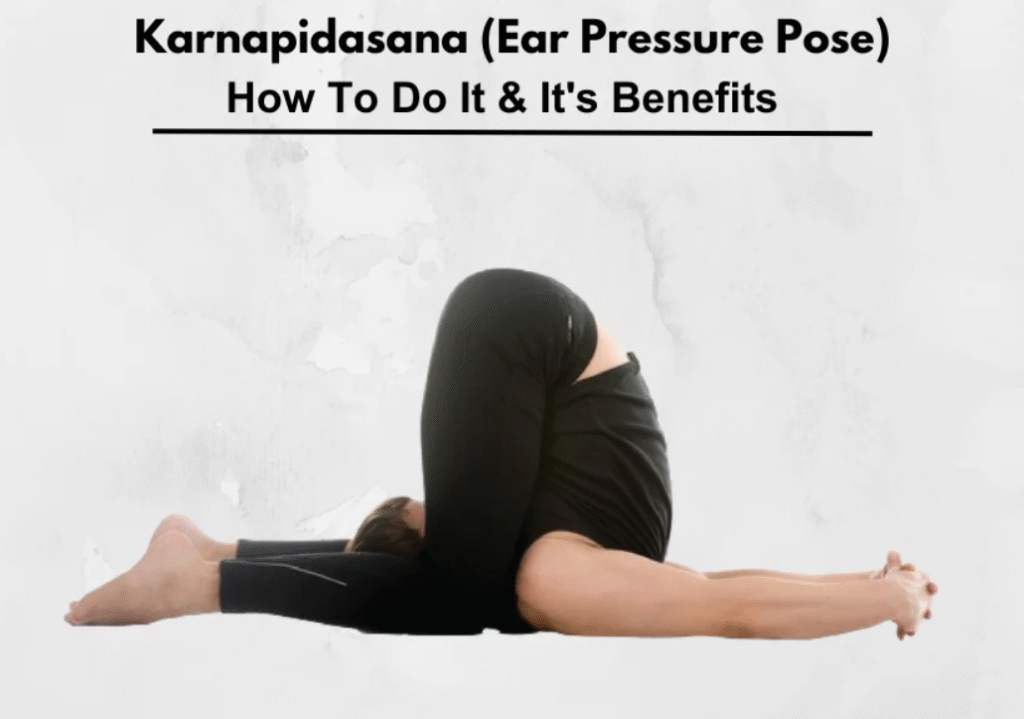
Karnapidasana, commonly known as Ear Pressure Pose, is a deep forward-folding yoga asana that is usually practiced as part of the inversion series, often following Halasana (Plow Pose). This posture is highly effective for calming the mind, improving flexibility, and stimulating the internal organs. Despite appearing simple, Karnapidasana requires patience, awareness, and controlled breathing to experience its full benefits.
In today’s stressful lifestyle, where mental noise and physical stiffness are common, Karnapidasana offers a powerful way to withdraw the senses, relax the nervous system, and turn awareness inward. The pose gently presses the knees against the ears, symbolically closing off external distractions and encouraging deep introspection.
This asana is suitable for intermediate practitioners but can also be adapted for beginners with proper guidance and support.
Meaning and Significance of Karnapidasana
The name Karnapidasana comes from three Sanskrit words:
-
Karna meaning ear
-
Pid meaning pressure
-
Asana meaning posture
Together, Karnapidasana translates to Ear Pressure Pose. The posture symbolizes withdrawal from external sensory input, a concept closely related to Pratyahara, the fifth limb of Ashtanga Yoga. By gently blocking the ears with the knees, the practitioner is encouraged to move attention inward, promoting self-awareness and mental clarity.
This pose is deeply connected to yogic practices aimed at calming the mind and preparing the body for meditation and pranayama.
Importance of Karnapidasana in Yoga Practice
Karnapidasana is considered an advanced variation of Halasana and plays a significant role in balancing the body after intense physical activity. It is especially beneficial for people who experience stress, anxiety, and mental restlessness.
The inversion aspect of the posture improves blood circulation to the brain, while the forward fold stretches the spine and relaxes the muscles. Practicing Karnapidasana regularly helps improve posture, spinal flexibility, and mental discipline.
This asana is often included in Hatha Yoga and Iyengar Yoga sequences and is recommended as a preparatory pose for deeper meditative practices.
Step-by-Step Procedure to Perform Karnapidasana
Follow these steps carefully to practice Karnapidasana safely:
-
Lie flat on your back in Shavasana with arms resting beside the body.
-
Inhale deeply and raise both legs to 90 degrees.
-
Exhale and slowly lift the hips, bringing the legs over the head into Halasana.
-
Support the back with the hands if needed.
-
Bend both knees and gently lower them toward the floor beside the ears.
-
Press the knees lightly against the ears without strain.
-
Keep the arms extended on the floor or clasped behind the back.
-
Maintain slow, deep breathing and relax the neck and shoulders.
-
Hold the posture for 15–30 seconds initially, gradually increasing with practice.
-
To release, straighten the legs back into Halasana and slowly return to Shavasana.
Always move slowly and mindfully, especially while entering and exiting the pose.
Breathing Technique in Karnapidasana
Breathing should remain calm and controlled throughout Karnapidasana:
-
Inhale deeply before lifting the legs.
-
Exhale while folding into the posture.
-
Breathe normally in the final position.
-
Focus on deep abdominal breathing.
Proper breathing enhances relaxation and increases the therapeutic effects of the pose.
Physical Benefits of Karnapidasana
Regular practice of Karnapidasana offers several physical benefits:
1. Improves Spinal Flexibility
The deep forward bend stretches the entire spine, increasing flexibility and relieving stiffness.
2. Stimulates Digestive Organs
Compression of the abdomen massages the digestive organs, improving digestion and reducing constipation.
3. Strengthens Neck and Back Muscles
The pose strengthens the muscles supporting the spine and neck when practiced correctly.
4. Enhances Blood Circulation
As an inversion, Karnapidasana improves blood flow to the brain and upper body, nourishing the nervous system.
5. Reduces Fatigue
The posture relaxes the body deeply, helping relieve physical and mental exhaustion.
Mental and Emotional Benefits of Karnapidasana
Karnapidasana is especially known for its calming effects on the mind:
1. Reduces Stress and Anxiety
The inward-focused nature of the pose helps calm the nervous system and reduce stress levels.
2. Enhances Concentration
By minimizing sensory input, the pose improves mental focus and awareness.
3. Promotes Emotional Stability
Regular practice helps balance emotions and reduces mood swings.
4. Encourages Introspection
Karnapidasana naturally encourages self-reflection and mindfulness.
Therapeutic Benefits of Karnapidasana
In yoga therapy, Karnapidasana is used for various conditions:
-
Helps manage mild depression and anxiety
-
Beneficial for insomnia and sleep disorders
-
Supports hormonal balance
-
Aids in relieving headaches and migraines
-
Helps reduce symptoms of stress-related disorders
Variations of Karnapidasana
1. Supported Karnapidasana
Using yoga blocks or blankets under the knees or back for support.
2. One-Legged Karnapidasana
One knee is bent toward the ear while the other leg remains extended, suitable for flexibility training.
3. Dynamic Karnapidasana
Moving slowly in and out of the posture with breath awareness.
Precautions and Contraindications
Karnapidasana should be practiced with caution:
-
Avoid if you have neck or spinal injuries
-
Not recommended for people with severe back pain
-
Avoid during pregnancy and menstruation
-
People with high blood pressure or heart conditions should consult a yoga expert
Never force the body into the posture.
Best Time to Practice Karnapidasana
The best time to practice Karnapidasana is early morning on an empty stomach. It can also be practiced in the evening with a gap of 4–5 hours after meals.
Ensure a calm and quiet environment for maximum benefits.
Karnapidasana and Meditation
Karnapidasana is often practiced before meditation because it calms the mind and prepares the body for stillness. The pose encourages sensory withdrawal, making meditation more effective.
Practicing this asana before pranayama enhances breathing awareness and lung capacity.
Common Mistakes to Avoid
-
Holding the breath
-
Applying excessive pressure on the neck
-
Rushing into or out of the posture
-
Forcing the knees to touch the ears
Mindful practice is essential.
Role of Karnapidasana in Daily Life
Incorporating Karnapidasana into daily yoga practice helps manage stress, improve posture, and enhance overall well-being. It is especially beneficial for students, professionals, and individuals dealing with mental fatigue.
Regular practice cultivates patience, discipline, and inner calm.
Conclusion
Karnapidasana is a powerful yoga posture that promotes physical flexibility, mental relaxation, and emotional balance. Though slightly challenging, consistent and mindful practice brings profound benefits.
By including Karnapidasana in your yoga routine, you can experience reduced stress, improved digestion, better focus, and enhanced inner awareness. Practiced with care and proper guidance, this asana becomes a valuable tool for holistic health and spiritual growth.
Karnapidasana is not just a posture—it is a journey inward toward silence, balance, and self-discovery.
Leave a Reply