Introduction to Anjaneyasana
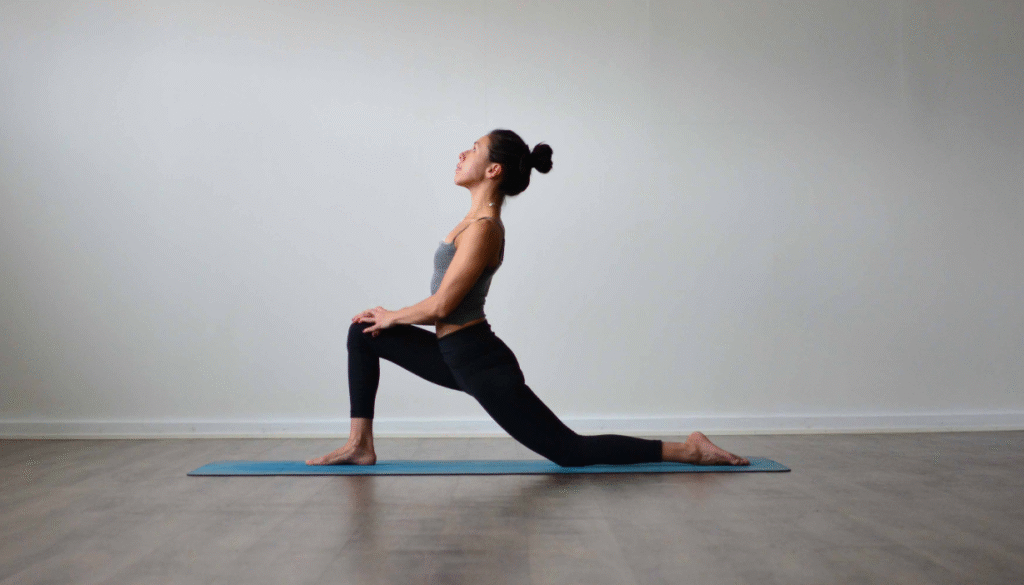
Lunge Pose, commonly known in yoga as Anjaneyasana, is a powerful standing posture that builds strength, flexibility, balance, and mental focus. It is a fundamental pose practiced in many yoga styles including Hatha Yoga, Vinyasa Yoga, Power Yoga, and Ashtanga Yoga. The posture is named after Anjaneya, another name for Lord Hanuman, symbolizing strength, devotion, courage, and humility.
Lunge Pose is often included in Sun Salutation sequences and dynamic yoga flows. It engages multiple muscle groups at once, making it an excellent pose for developing lower-body strength while also opening the hips and chest. Though it looks simple, Anjaneyasana offers deep physical and mental benefits when practiced with correct alignment and mindful breathing.
This asana is suitable for beginners as well as advanced practitioners, as it can be easily modified according to flexibility and strength levels. Regular practice of Lunge Pose improves posture, enhances body awareness, and prepares the body for more advanced yoga postures.
Meaning and Significance of Anjaneyasana
The Sanskrit word Anjaneyasana is derived from Anjaneya, meaning “son of Anjana,” which refers to Lord Hanuman. The pose reflects Hanuman’s powerful leap, symbolizing inner strength, confidence, and expansion.
Spiritually, Lunge Pose encourages openness of the heart and courage to move forward in life. The upward stretch of the arms and chest signifies growth and aspiration, while the grounded legs represent stability and determination. This balance between grounding and expansion is a key principle in yoga practice.
Importance of Anjaneyasana in Yoga Practice
Lunge Pose plays a vital role in yoga sequences because it strengthens the foundation of the body—particularly the legs and hips—while also improving balance and coordination. It is often used as a transition pose between standing and seated postures.
This asana is especially beneficial for people who spend long hours sitting, as it counteracts hip stiffness and poor posture. Athletes and fitness enthusiasts also practice Lunge Pose to improve mobility, endurance, and muscular balance.
Types of Anjaneyasana in Yoga
There are several variations of Lunge Pose, each offering unique benefits:
-
Low Lunge (Anjaneyasana) – Back knee rests on the floor.
-
High Lunge (Utthita Ashwa Sanchalanasana) – Back leg lifted and strong.
-
Twisted Lunge – Includes a spinal twist for detoxification.
-
Crescent Lunge – Arms lifted overhead, emphasizing balance.
All these variations help improve flexibility, strength, and body awareness.
Step-by-Step Procedure to Perform Anjaneyasana Pose (Low Lunge)
Follow these steps to practice Anjaneyasana safely:
-
Begin in Downward Facing Dog or Tabletop Pose.
-
Step your right foot forward between your hands.
-
Lower your left knee to the floor and untuck the toes.
-
Align your right knee directly over the ankle.
-
Inhale and raise your torso upright.
-
Lift both arms overhead with palms facing each other.
-
Sink your hips gently forward and downward.
-
Keep your chest open and shoulders relaxed.
-
Gaze forward or slightly upward.
-
Hold the pose for 20–40 seconds with steady breathing.
-
Release gently and repeat on the other side.
Breathing Technique in Anjaneyasana
Breathing is essential for maintaining balance and stability in Lunge Pose:
-
Inhale deeply as you lift your arms and chest.
-
Exhale slowly while sinking the hips.
-
Maintain smooth, rhythmic breathing while holding the posture.
Proper breathing enhances endurance and helps calm the mind.
Physical Benefits of Anjaneyasana
1. Strengthens the Legs and Hips
Lunge Pose engages the quadriceps, hamstrings, glutes, and hip flexors, building lower-body strength.
2. Improves Hip Flexibility
The deep stretch in the hip flexors helps release stiffness caused by prolonged sitting.
3. Enhances Balance and Stability
Practicing Lunge Pose improves coordination and body alignment.
4. Opens the Chest and Shoulders
The lifted arms and open chest counteract slouching and improve posture.
5. Boosts Core Strength
The pose activates abdominal muscles, supporting spinal stability.
Mental and Emotional Benefits of Anjaneyasana
Lunge Pose is not only physically empowering but also mentally uplifting:
-
Builds confidence and self-belief
-
Improves focus and concentration
-
Reduces stress and mental fatigue
-
Encourages emotional release and clarity
Holding the posture with mindful breathing helps cultivate patience and resilience.
Therapeutic Benefits of Anjaneyasana
Lunge Pose is beneficial in yoga therapy for:
-
Relieving lower back stiffness
-
Improving posture-related discomfort
-
Enhancing circulation in the pelvic region
-
Supporting recovery from mild muscular imbalances
It is often recommended for people with sedentary lifestyles.
Anjaneyasana for Beginners
Beginners can practice Lunge Pose with simple modifications:
-
Use yoga blocks under the hands for support
-
Keep the back knee on the floor
-
Reduce the depth of the lunge
-
Practice near a wall for balance
These adjustments make the pose safe and accessible.
Advanced Variations of Anjaneyasana
Advanced practitioners can explore deeper expressions:
-
High Lunge with Backbend
-
Twisted Crescent Lunge
-
Lunge with Eagle Arms
These variations increase strength, flexibility, and coordination.
Common Mistakes to Avoid
-
Letting the front knee move beyond the ankle
-
Collapsing the chest or rounding the shoulders
-
Losing balance due to uneven weight distribution
-
Holding the breath
Awareness and alignment are key to safe practice.
Precautions and Contraindications
Practice Lunge Pose with care if you have:
-
Knee injuries
-
Hip or lower back pain
-
Balance issues
Pregnant women should practice under expert guidance. Always listen to your body and avoid pain.
Best Time to Practice Anjaneyasana
The ideal time to practice Lunge Pose is in the morning on an empty stomach. It can also be practiced in the evening with a sufficient gap after meals.
Including this pose in daily yoga practice enhances overall strength and flexibility.
Role of Anjaneyasana in Daily Life
In modern life, prolonged sitting weakens the hips and legs. Lunge Pose helps restore natural movement patterns, improves posture, and boosts energy levels.
It is especially beneficial for office workers, students, and athletes.
Anjaneyasana in Yoga Sequences
Lunge Pose is commonly included in:
-
Sun Salutation flows
-
Vinyasa sequences
-
Strength-building yoga routines
It acts as a bridge between grounding and expansion.
Conclusion
Lunge Pose (Anjaneyasana) is a dynamic and empowering yoga posture that strengthens the body while opening the heart and hips. Its physical benefits include improved strength, flexibility, and balance, while its mental benefits include confidence, focus, and emotional stability.
Whether you are a beginner or an advanced yogi, incorporating Lunge Pose into your daily routine can significantly enhance your overall well-being. With regular and mindful practice, Anjaneyasana helps you move forward in life with strength, stability, and grace
Leave a Reply