What is Halasana?
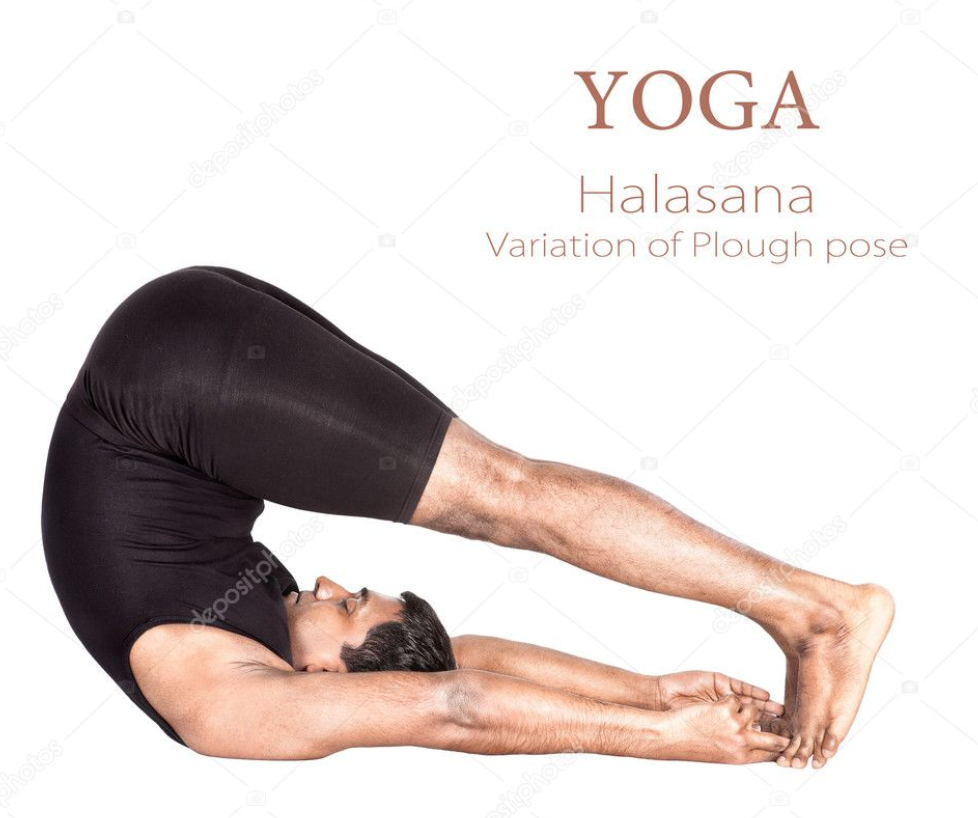
Halasana is an inverted yoga pose in which the legs are lifted overhead from a supine position until the toes touch the floor behind the head. The posture compresses the abdomen, stretches the back and neck, and increases blood circulation to the brain.
Halasana is commonly practiced after Sarvangasana (Shoulder Stand) and is often followed by Matsyasana (Fish Pose) to balance the spine. It is an integral part of traditional yoga sequences designed to energize and detoxify the body.
How to Perform Halasana (Steps)
Follow these steps carefully to practice Halasana safely:
-
Starting Position
Lie flat on your back on a yoga mat with arms relaxed beside the body and palms facing down. -
Raise the Legs
Inhale deeply and slowly lift both legs together to a 90-degree angle. -
Lift the Hips
Exhale and gently lift your hips off the mat, supporting your lower back with your hands if needed. -
Bring Legs Overhead
Continue moving the legs over your head until your toes touch the floor behind you. -
Hand Placement
Keep your hands on the floor with palms facing down, or interlock fingers behind the back for support. -
Hold the Pose
Breathe normally and hold the pose for 20–60 seconds, depending on comfort and experience. -
Release Slowly
To come out, gradually lower the spine and legs back to the floor vertebra by vertebra.
Benefits of Halasana

Halasana offers a wide range of health benefits when practiced regularly:
1. Improves Spinal Flexibility
Halasana deeply stretches the entire spine, helping relieve stiffness and improve posture.
2. Stimulates Digestive Organs
The compression of the abdomen massages internal organs, improving digestion and relieving constipation.
3. Strengthens Core Muscles
Maintaining balance in the pose activates abdominal and core muscles.
4. Calms the Nervous System
The inverted position increases blood flow to the brain, reducing stress and anxiety.
5. Supports Weight Management
By stimulating the thyroid gland, Halasana helps regulate metabolism.
6. Improves Blood Circulation
This pose enhances circulation throughout the body, promoting overall vitality.
Halasana and Hormonal Balance
Halasana gently stimulates the thyroid and parathyroid glands, which play a vital role in regulating metabolism, energy levels, and hormonal balance. Regular practice may be beneficial for people experiencing hormonal imbalances, sluggish metabolism, or fatigue.
Halasana for Mental Health
Halasana is highly effective for mental relaxation. It reduces mental restlessness, improves concentration, and helps manage stress, insomnia, and mild depression. Practicing this pose with slow breathing can create a deep sense of inner calm 🧘♀️.
Precautions and Contraindications
While Halasana is beneficial, it requires proper technique and caution:
-
Avoid if you have neck injuries or cervical spondylosis
-
Not recommended for people with severe back pain
-
Avoid during pregnancy and menstruation
-
People with high blood pressure, hernia, or glaucoma should consult a yoga expert
-
Never jerk or force the legs into position
Tips for Beginners
-
Practice under guidance if new to yoga
-
Use folded blankets under shoulders to protect the neck
-
Do not strain the neck or lower back
-
Focus on slow, controlled breathing
-
Always warm up before attempting Halasana
Best Time to Practice Halasana
Halasana is best practiced:
-
Early morning on an empty stomach
-
Or in the evening, at least 4–5 hours after meals
It should be practiced on a clean surface in a calm environment for maximum benefit.
Conclusion
Halasana is a powerful yoga posture that nurtures the body, calms the mind, and revitalizes internal systems. Though it demands flexibility and control, its rewards are immense—from improved digestion and spinal health to mental peace and hormonal balance.
With regular practice, proper guidance, and mindful breathing, Halasana can become a transformative part of your yoga routine. It teaches balance, patience, and surrender, reminding us that flexibility in the body leads to balance in the mind
Leave a Reply