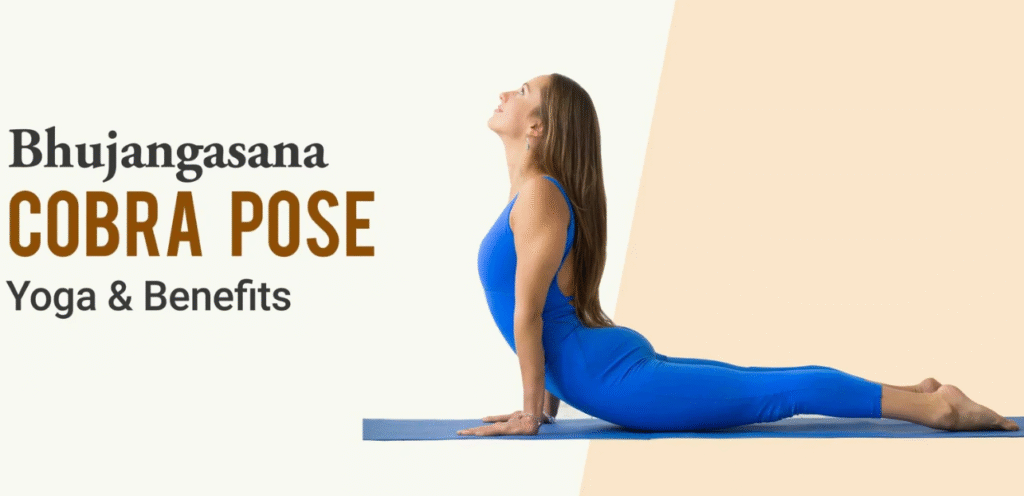
What is Bhujangasana?
The word Bhujangasana comes from Sanskrit:
-
Bhujanga means cobra
-
Asana means posture
In this pose, the upper body rises like a cobra with its hood lifted. It mainly targets the spine, chest, shoulders, and abdominal muscles, making it ideal for both physical and mental well-being.
Bhujangasana is commonly practiced in Hatha Yoga and modern yoga routines because it gently strengthens the back while opening the chest and lungs.
Step-by-Step Procedure to Perform Bhujangasana
Let’s understand the correct way to perform Bhujangasana safely and effectively:
-
Start Position
Lie flat on your stomach on a yoga mat. Keep your legs straight, feet together, and forehead resting on the mat. -
Hand Placement
Place your palms beside your chest, elbows close to your body. -
Inhale & Lift
Take a deep breath in and slowly lift your head, chest, and upper abdomen. Your navel should remain on the mat. -
Chest Opening
Press lightly through your palms, open your chest, and roll your shoulders back. Keep elbows slightly bent. -
Hold the Pose
Hold for 15–30 seconds while breathing normally. Feel the stretch in the spine and abdomen. -
Release Slowly
Exhale and gently lower your chest and head back to the mat.
Repeat this pose 2–3 times for best results.
Top Benefits of Bhujangasana
Bhujangasana offers both physical and mental benefits:
1. Strengthens the Spine
Regular practice improves spinal flexibility and reduces stiffness.
2. Improves Posture
Helps correct rounded shoulders and slouching habits.
3. Boosts Digestion
Massages abdominal organs and improves digestive health.
4. Reduces Back Pain
Very effective for mild lower back pain caused by long sitting hours.
5. Expands Lungs
Opens the chest, improving breathing capacity and oxygen intake.
6. Relieves Stress & Fatigue
Calms the nervous system and reduces mental tension.
7. Helps Hormonal Balance
Stimulates adrenal glands and improves overall energy levels.
Best Time to Practice Bhujangasana
The best time to practice Bhujangasana is early morning on an empty stomach. However, you can also practice it in the evening, ensuring a gap of 4–5 hours after meals.
Practice on a calm surface in a well-ventilated space for maximum benefit.
Precautions & Contraindications
While Bhujangasana is safe for most people, some should practice with caution:
-
Avoid if you have recent abdominal surgery
-
Not recommended during pregnancy
-
People with severe back injury or hernia should consult a yoga expert
-
Do not overstretch; listen to your body
Always focus on comfort rather than pushing too hard.
Tips for Beginners
-
Keep elbows bent; do not lock arms
-
Focus on lifting using back muscles, not just hands
-
Maintain steady breathing
-
Use a folded blanket under the pelvis if needed
Consistency is more important than intensity.
Who Should Practice Bhujangasana?
-
Office workers
-
Students
-
Anyone seeking better posture, digestion, and mental calm
This asana is suitable for beginners as well as advanced practitioners.
Leave a Reply