WHAT IS PASCHIMOTTANASANA?
Paschimottanasana is a classical Hatha Yoga posture where you sit with your legs extended straight in front of you and fold forward from the hips to reach toward your feet. The name comes from Sanskrit:
-
Paschima = west or back of the body
-
Uttana = intense stretch
-
Asana = pose
Even though it’s a “forward bend,” the stretch actually targets the entire back body—from the heels all the way up to the neck. Energetically, it is considered a cooling, calming, introspective pose that helps quiet the mind and soothe the nervous system.
✨ BEGIN WITH A WARM-UP
A lot of people try to dive into Paschimottanasana cold, and then wonder why it feels stiff or uncomfortable. Let’s take a minute to warm up properly.
Sit comfortably on your mat. Take a few slow breaths.
Gently roll your shoulders back.
Shake out your legs, point and flex your toes.
You can also do a few gentle seated cat-cow movements to wake up the spine.
Remember, yoga isn’t about forcing your body; it’s about preparing it so the posture unfolds naturally.
✨STEP-BY-STEP GUIDED PRACTICE
Now let’s come into the posture together.
-
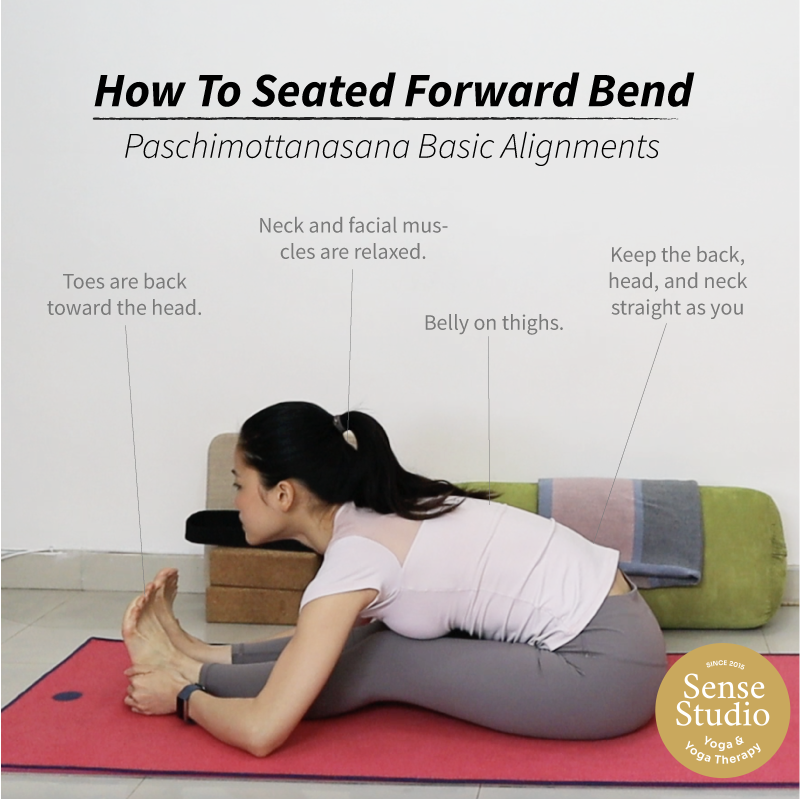
Sit on your mat with your legs extended straight out in front of you. Keep your spine long.
-
Flex your toes back toward your face. This activates the legs and protects the knees.
-
Ground your sit bones into the mat. If your lower back rounds easily, sit on a folded blanket or cushion.
-
Inhale deeply—lift your arms overhead, lengthening through the spine.
-
Exhale and hinge at the hips, not the waist, as you begin to fold forward.
-
Keep the spine long. Think of your chest reaching toward your toes, not your forehead dropping down.
-
Hold your shins, ankles, or feet—wherever your body comfortably allows. There’s no need to force the grip.
-
Relax your shoulders and soften your jaw.
-
Take slow breaths, allowing the body to release tension naturally.
Stay here for 5–10 breaths, or longer if it feels good.
The key is to keep the movement active but soft. You’re not collapsing into the pose, and you’re not yanking yourself deeper. Think of approaching the posture with curiosity rather than ambition.
✨BENEFITS OF PASCHIMOTTANASANA
This posture carries a long list of physical and mental benefits. Let’s break them down:
1. Deep Stretch for the Entire Back Body
Paschimottanasana lengthens the hamstrings, calves, spine, and even the Achilles tendons. For anyone who sits for long hours or feels tightness along the back of the legs, this pose brings huge relief.
2. Calms the Mind
Forward bends naturally soothe the nervous system. This posture encourages a sense of inward focus, quieting the mind and reducing anxiety.
3. Improves Digestion
By gently compressing the abdomen, Paschimottanasana stimulates digestive organs and may help with bloating, gas, and sluggish digestion.
4. Enhances Flexibility
Regular practice increases your range of motion in the hips and lower back, making daily movements smoother and more comfortable.
5. Promotes Relaxation
This pose activates the parasympathetic nervous system—your rest-and-digest mode—making it a wonderful practice before meditation or sleep.
✨MODIFICATIONS AND PROPS
Everyone’s body is different, which means your Paschimottanasana might look different from mine—and that’s perfectly okay! Here are some ways to adjust the pose to meet your body where it is:
Use a Strap
If your hands don’t reach your feet, loop a yoga strap or even a towel around the soles of your feet. Hold the ends and gently pull to keep your spine long.
Sit on a Cushion
If your lower back rounds, elevate your hips by sitting on a folded blanket. This instantly improves alignment and makes the pose much more comfortable.
Bend Your Knees
A slight bend in the knees takes pressure off tight hamstrings while still allowing you to fold forward safely.
Rest on a Bolster
Place a bolster or pillow on your legs and fold forward onto it for a restorative variation.
✨COMMON MISTAKES TO AVOID
Let’s go through some frequent mistakes so you can practice safely.
1. Rounding the Back Too Much
We want a long spine, not a collapsed one. Lead with your chest, not your forehead.
2. Pulling Yourself Forward
Using your arms to force yourself deeper can strain the lower back. Let your breath guide the fold.
3. Locking the Knees
Hyperextending the knees puts unnecessary pressure on the joints. Micro-bend if needed.
4. Holding the Breath
Forward folds work best when paired with slow, steady breathing. If you’re holding your breath, you’re pushing too hard.
✨WHEN TO AVOID THIS POSE
Skip or modify this pose if you have:
-
severe lower back issues
-
recent hamstring injuries
-
sciatica flare-ups
-
abdominal surgery
Always listen to your body and consult a professional if unsure.
✨CLOSING THOUGHTS
Paschimottanasana isn’t just a stretch—it’s a practice in patience, humility, and surrender. Every day your body is different. Some days the fold feels deep and spacious, and other days it feels tight and limited. Both experiences are part of your yoga journey.
Instead of chasing the perfect shape, focus on the feeling. Focus on your breath. Let the posture become a mirror that reflects how you’re doing today—physically, mentally, and emotionally.
If you practice Paschimottanasana regularly, even for just a minute a day, you’ll notice greater flexibility, improved calmness, and a deeper connection with your body.
Leave a Reply